
By Kristen Nevarez Schweizer
April 15, 2026
Sit down. Let me tell you about a man named August Wilson — a man who changed Black theatre forever — and how he is affecting San Diego right now. In 1968, Wilson made a commitment to chronicle Black life until the whole country paid attention. He wrote ten plays, one for each decade of the twentieth century, chronicling the African American Experience. Today, the 100-year project has its own Wikipedia page: The Pittsburgh Cycle, because his plan worked, and it’s still working.
When you see Fences at The Old Globe, you’re witnessing one of America’s great pieces of dramatic writing. And I use great in the Biblical sense, in the way that means the goodness will outlive us. Fences is the 1950s installment of Wilson’s cycle, and arguably the most famous. Fences won the Pulitzer, the Tony, and the heart of Denzel Washington. (Washington starred in the 2010 Broadway revival and the 2016 film with Viola Davis.)
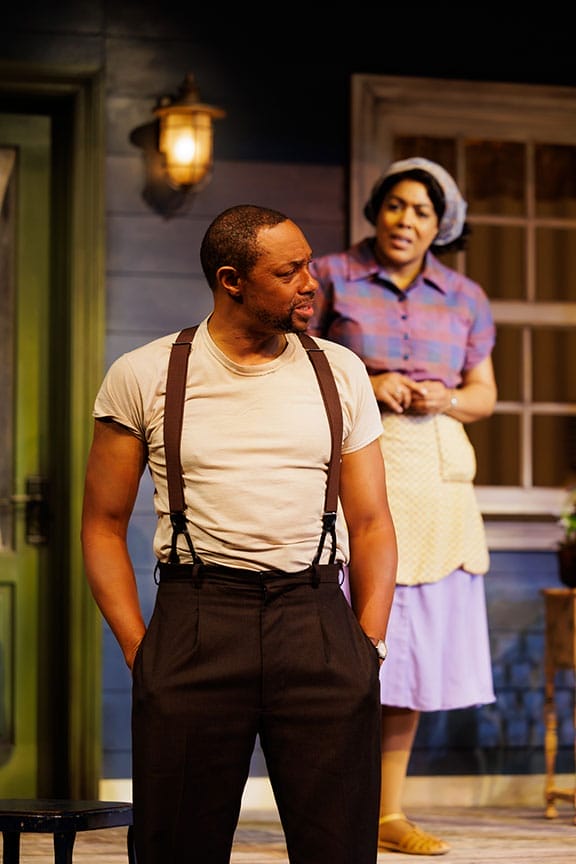
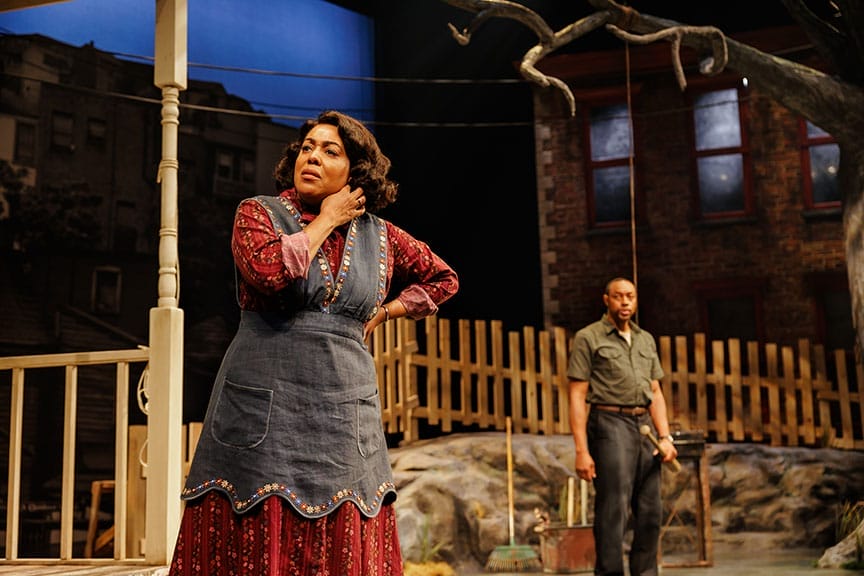
The show still resonates today because of Wilson’s ferocity in capturing and translating Black interiority. He wrote characters that crackle with dreams and flaws and personal origin. Troy Maxson, the protagonist of Fences, is a 53-year-old former Negro League baseball player turned city garbage collector. He is large and loud, the storyteller who holds court in his backyard (designed immersively by Lawrence E Moten III). Troy is funny, infuriating, tender, and capable of spectacular betrayal. He is not a symbol of suffering or a lesson; he’s too well drawn for moralism or legend. Troy Maxson is one of the great tragic heroes in the ranks of Willy Loman and King Lear, because he loves so fiercely, so clumsily, so wrong, until the fences he builds as protection become a cage.
I attended The Old Globe’s BIPOC night performance, a rare evening where white retirees are not the obvious majority of the audience. The energy of the room — shouting and responding throughout the performance — served as a joyful yet heartbreaking reminder of why it still matters when a major stage produces a play with an entirely Black cast, helmed by a Black director. We have not yet arrived at a world where that’s unremarkable. Which means every production of Fences that gets done right (and this one does) is still doing the work Wilson intended to expand the imagination of what a theatre audience expects to witness, feel, and recognize.
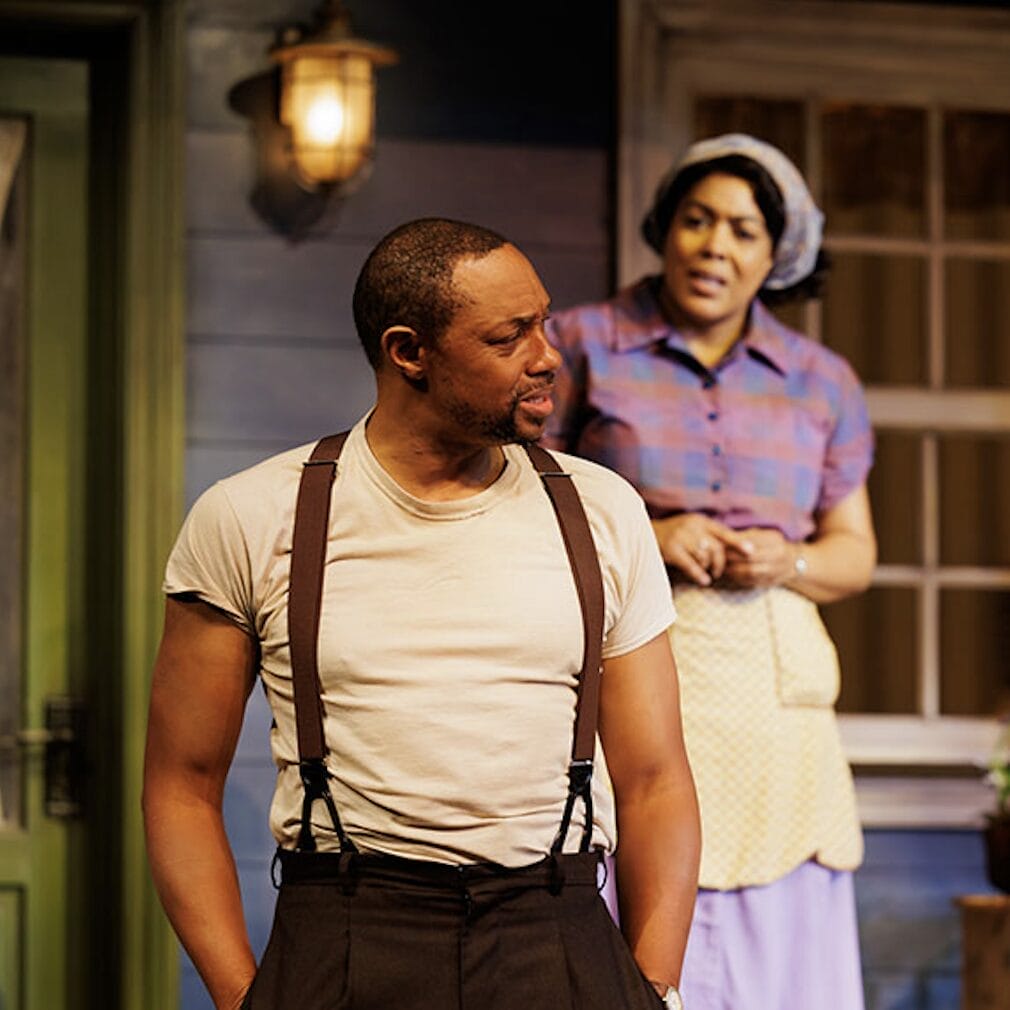
Dorian Missick, as Troy Maxson, delivers the bombastic monologues, small shame, and heart-wrenching missteps that turn the great script into an evening I will never forget. While the spectacular cast around him needs no coverage, Missick still carries this show.
The whole thing comes together because it’s directed by Delicia Turner Sonnenberg, whom San Diego gets to brag about knowing-her-when. She founded MOXIE Theatre and helmed it for 12 seasons. Sonnenberg’s credits now include The Old Globe, The Alley Theatre, South Coast Rep, and Utah Shakespeare, to name a few. Next month, she’s directing La Jolla Playhouse’s West Coast premiere of Purpose, the 2025 Tony and Pulitzer Prize winner for Best Play. (Oprah said it’s brilliant, so: we’re all going.)
Fences runs through May 3. It is exactly what theatres were built for, and springtime in Balboa Park is a beautiful place to remember that. Also, parking is free (after 6 PM) and plentiful in Balboa Park, so please don’t let the rumors hold you back.
Fences
By August Wilson
Directed by Delicia Turner Sonnenberg
Pulitzer Prize and Tony Award-winning Fences is a cornerstone of August Wilson’s The American Century Cycle, and a powerful exploration of fatherhood, identity, and legacy. Set in 1957, the play follows Troy Maxson, a former Negro League baseball star, now a sanitation worker. Grappling with the burden of his broken dreams, Troy struggles to assert control over his family and his future. Director and Old Globe favorite Delicia Turner Sonnenberg (Deceived, Trouble in Mind), helms this deeply human portrait of a family’s love and resilience. August Wilson’s Fences contains mature themes, depictions of violence, and strong language, including the use of the N-word within the Black community.
This production runs two hours and 10 minutes with one intermission.
The Old Globe Theatre
April 4 – May 3, 2026