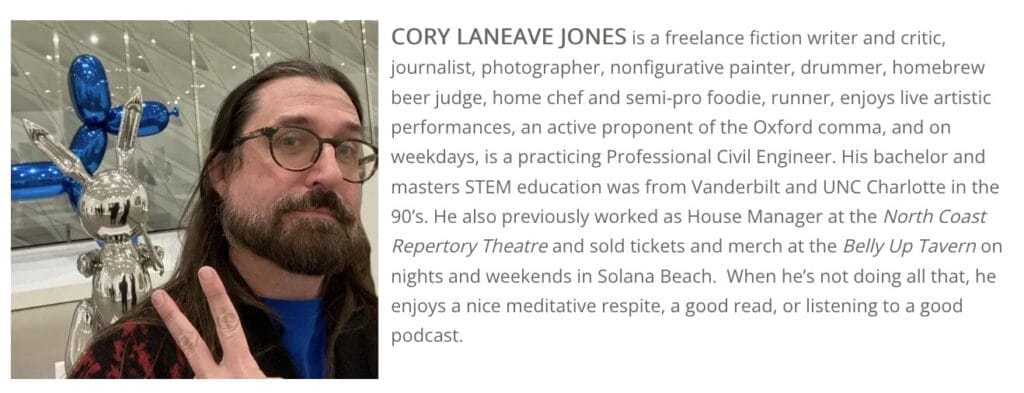

By Cory-LaNeave Jones
March 3, 2026

When we stop paying attention to the oceans, will we finally have the real “Fishing Blues”?
Henry “Ragtime Texas” Thomas first recorded a version of the song in 1928, though its roots stretch further back. The arrangement later became a signature piece for the blues and world music great Taj Mahal, whose musical life has unfolded as both archive and prophecy. His name evokes distant morphemes, yet his artistic foundation lies in soil, water, and memory.
Taj Mahal. If you don’t know, he is one of the most authentic multi-instrumentalist performers of our day, who always provides a moving experience. He engages with the audience, in both jest and inspiring liveliness creationism. What does that mean? It means, he makes you want to get up from your seat and move. Taj is currently touring with The Phantom Blues Band. Whether it’s the smooth waves of Caribbean sounds, currently provided by his steelpan drummer, Robert Greenidge (who’s toured with Jimmy Buffett, Robert Palmer, John Lennon and Yoko Ono, Ringo, Earth, Wind & Fire, and Carley Simon). The Phantom Blues Band also includes Chicago bluesman Jim Pugh on organ and keyboards, Trinidad and Tobago native Tony Durham on the drum kit, and Omaha native Bill Rich on bass guitar.
It’s a fun show, where Taj doesn’t mind audience members shouting out their favorite hits, like Corinna, Fishing Blues, or Statesboro Blues. As long as you don’t mind a feisty retort, you’ll be fine, and he will likely get around to playing your requests. In a 1973 article in The New York Times with Susan Lydon, Taj clarified his intentions:
“I’m not out to get attention. It’s not my ego trip. It’s everybody’s music. If it was my ego trip, I’d be out here blasting everybody’s ear’s off. A lot of people wonder what I’m up to. I’m really just trying to see what happens when people can really let loose and enjoy themselves. What I’m really saying when I play and try to get collective participation from the audience is ‘I been up here jumpin’ around like a maniac. Now it’s your turn. Sock it to yourself, baby!’”
That energy has not changed in the last 53 years. He has received accolades from all over the world— releasing 32 studio albums and 15 live albums since 1968. He won a Blues Music Awards Historical Album of the Year for Essential Taj Mahal in 2006 and won 5 Grammys for Best Contemporary Blues for Señor Blues in 1997, for Shoutin’ in Key in 2000, for TajMo in 2018, and for Best Traditional Blues for Get On Board in 2022 and Swingin’ Live at the Church in Tulsa in 2025. But don’t think that he is on any sort of farewell tour, like KISS’s End of the Road or The Band’s The Last Waltz. He’s just staying out here, doing what he always does. Playing great music to excite a crowd of people, no matter your background, age, or religion.
Moving through my short discussion with this master, I reflect on the fragility of water, that molecule that life depends upon — Eden’s paradise, lost by man’s hand — this also forms the emotional register of our conversation on a winter evening under The Magnolia in El Cajon. His voice moved between environmental witness, cultural historian, and working musician. Today, the blues expresses our existential choice to watch this industrial capitalistic freight train roll right over our ecological awareness and natural sensibilities. Why do we sit and stare at this train wreck when we can do something positive while we are still here? That’s his take away. Let’s not just jump and shake and shout, let’s also live collaboratively, eat locally grown organic foods, and try to live in harmony.
Origins: Soil Before Stage
Born Henry St. Claire Fredericks Jr., Taj Mahal grew up in a household where music functioned as atmosphere rather than activity. His father, a Caribbean jazz arranger and pianist (dubbed “The Genius” by Ella Fitzgerald), and his educator mother cultivated a worldview where art and responsibility were inseparable.
Long before global tours and awards, he encountered agriculture as vocation and philosophy. He recalls postwar America accelerating toward industrial abundance while ignoring ecological cost. That awareness redirected his life toward farming, sustainability, and traditional knowledge.
So I understand that you’re connected with Greg Reitman and his Blue Water Institute and Film Festival. Maybe you can start by telling me a little bit about how you got connected with that crew and some of your interests in sustainability, environmentalism, climate change, which I imagine is really the thrust of what I understand they do.
“Well, it basically started out as a kid growing up in the forties and the fifties and noticing the way of basically western civilization in the United States of America and the West were all in post-war and headlong into polluting the skies and the ocean and just completely going wild and not at all dealing with the normalcy of the earth. So as a kid, I had a lot of trepidation about that. … , if this thing was on a collision course with the way that they were ignoring the red flags, basically creating mayhem in their food chain. I would be doing something positive: farming, being natural with the earth, and talking to the older people and getting information from them about how to be sustainable.”

homestead garden.
He credits early influence from agrarian thinkers Helen Nearing and Scott Nearing, whose book Living the Good Life advocated self-sufficient homesteading and locally grown food systems. Their model framed sustainability not as ideology but daily practice.
He also cites the composting movement of J. I. Rodale and the research tradition of the Rodale Institute, which helped popularize soil regeneration through compost science. These ideas paralleled the agricultural innovations of George Washington Carver, whose work in crop rotation and soil renewal shaped Taj Mahal’s environmental philosophy.
“George Washington Carver, a lot of people don’t really know, everybody goes, oh, we have peanuts.
No, it was a lot more than peanuts.
I mean, he completely… soybeans and the whole rotation of with crops, all this stuff.”
Carver scientifically explained to rural farmers who traditionally planted cotton that their soils were becoming nitrogen deficient over time as they continually planted the same crop. He assisted these farmers by explaining that alternating crops with sweet potatoes and other legumes like peanuts, soybeans and cowpeas, their soils would become restored and this increased nitrogen would yield increased quantities of harvests.
“… And even when we started our own compost piles and we were living and doing all that kind of stuff, being careful how we bought stuff, having our own bags to go to the market.”

His reflections under The Magnolia underscore that this awareness began in youth.
“Future Farmers of America, FFA. And so during the summer we went out, we’ll say 14 to 16 (years old), I picked tobacco in the Connecticut Valley. Cash for kids – you make $300 to $400 a summer as a kid in fifties – that was some serious money.
I didn’t realize they had tobacco up there.
“Yeah, shade-grown tobacco. … It is like there’s field grown [Flue-cured or Burley] in North Carolina. (In Connecticut, they have) “shade grown” [from Sumatra and Cuban seeds], under cloth tents (“cheesecloth”) that block 35% of sunlight, increasing humidity and temperature that mimics tropical conditions. They have a cloth over the whole field. It’s a different flavor, right?
A different genus of tobacco. And this is the one that makes the wrappers for the leaves. The leaves is like that, got a spine, got ’em up like this [using his hands, he shows me the approximate size of the leaves], all that goes in between there. That’s what they cut out [using his hands shows the cut-out portion from the leaf he just signed]. They dry and cut that out. And now those become the wrappers.
You got to fill the binder and the wrapper and Connecticut shade grown wrapper was classic. They used to have thousands, thousands of acres. I think they only got about 2,000 acres now, but they had anyway, on and on.
So I did that for a couple of years, and then I started working during my summers on farms, dairy farms.

Time Life Pictures, via Getty Images via New York Times, “From Calm Leadership,
Lasting Change” By Nancy F. Koehn, Oct. 27, 2012.
And so then I did that for a while and that’s how I got my money to go to university. And so little by little by little, as I got closer to the University, there was a lot of other ideas. Rachel Carson, “Silent Spring,” all these different things. “
Labor, Learning, and Early Ecology
I’ve known rivers:
I’ve known rivers ancient as the world and older than the flow of human blood in human veins.
My soul has grown deep like the rivers.
I bathed in the Euphrates when dawns were young.
I built my hut near the Congo and it lulled me to sleep.
I looked upon the Nile and raised the pyramids above it.
I heard the singing of the Mississippi when Abe Lincoln went down to New Orleans,
and I’ve seen its muddy bosom turn all golden in the sunset.
I’ve known rivers:
Ancient, dusky rivers.
My soul has grown deep like the rivers.
– Langston Hughes, “The Negro Speaks of Rivers”
from The Collected Works of Langston Hughes. (University of Missouri Press (BkMk Press), 2002)

Before music became a profession, he worked agricultural jobs across New England. These experiences were not incidental—they formed a worldview grounded in interdependence between human activity and environmental health.
“I spent time figuring that… at least while I was doing what I was doing, I would be doing something positive farming, being natural with the earth.”
He studied agriculture at the University of Massachusetts’ Stockbridge School, where sustainability emerged as intellectual framework rather than nostalgic ideal.
“You started seeing intelligent people talking about the earth.”
The shift from freshwater landscapes to ocean awareness expanded his ecological consciousness.
“Why don’t these guys get it? … they’re claiming to be superior intelligence and they’re defecating into the same place that they’re trying to collect their food out.”
It’s like that old joke. You know what the fish do in there.
“Exactly. So, then I came out to California, and of course California was wide open in terms of its ideas, embracing new ideas and having different kinds of things to be involved in. And so while I was here, I put my energy into those kind of things and was excited by it.”
The Blues as Environmental Memory
“Wake up mama I got something to tell you
You know I’m a man who love to sing the blues
Now you got to wake up baby, mama now, I got something; I got something to tell you
Well you know I’m the man, oh yes and I love to sing the blues
Come on baby, Come on”
– Leaving Trunk, Taj Mahal, 2003
For Taj Mahal, music is not separate from environmental knowledge. It is the emotional record of survival across migration, labor, and adaptation.
“Music is on all the time.”
The diasporic reach of blues links West African traditions to Caribbean rhythms and American forms. He emphasizes cultural continuity rather than cultural invention.
“There’s things that are happening because of the circumstances… and then there’s things that are a through line… connect to the ancient DNA.”
This global perspective is shaped by his collaborations with blues luminaries including Howlin’ Wolf, Buddy Guy, Lightnin’ Hopkins, and Muddy Waters—figures who collectively define modern blues lineage.
“Yeah. (don’t forget) Sleepy John Estes, Mance Lipscomb, Hammie Nickson, Joseph Spence, Yeah.”
Cinema and Cultural Precision
So, I believe you were associated with a movie in the past. Sounder? Tell me a little bit about that. What was that like?
“Yeah. Well, it was great. It was a real human interest story. See, during the Blacksploitation era, so much of that was, in my estimation, was ‘ghetto foolishness’ and nonsense. Here was a story that any family in the United States – that was struggling – could relate to. Not only that, if you knew the amount of people who came up to me and said, ‘I love that you did that movie, worked in that movie and did the soundtrack,’ and all that. We could have an experience with our children to go with. I mean, other than, damn, …”
Popular examples of those movies include Superfly, Foxy Brown, Coffy, Sweet Sweetback’s Baadassss Song, Cleopatra Jones, Shaft, Dolemite, … the list goes on. I personally love the Shaft and Superfly songs. But I totally agree with Taj, these are not kids movies.

How was it working with Cicely Tyson?
“Yeah. It’s funny, we worked together in that movie.
We didn’t realize that we were distant cousins to one another – because her people are from Nevis [Caribbean island, part of the Country of St. Kitts & Nevis] and my grandparents from St. Kitts and Nevis. So I mean, that was absolutely amazing. Only later did we find out.
But yeah, it was a wonderful experience. And also too, I oftentimes got upset about movies that would have absolutely the wrong music to represent what was going on.
This is rural.
We don’t need (a) separate orchestra in the background. Nothing wrong with Viennese Symphony Orchestra, but that’s the wrong place.
But you don’t want The Blue Danube, you know, I’m okay, hey, do it.
But no, no, no, no.
This is rural, Louisiana, in the 1920s, 1930s. So people need to feel that...
One, so many people loved the way that soundtrack came together, and two, for the first movie soundtrack that I’d ever done, to have it be both Academy-nominated and Grammy-nominated, I felt pretty good.
First time out. And it was the first acoustic blues soundtrack, the very first country acoustic country blues soundtrack very first.”
Sustainability, Industry, and Cultural Economics
Environmental critique emerges repeatedly in his commentary on industrial agriculture and corporate consolidation.
You were also involved in Farm Aid…
“I think it is terrible. The small farmer… can get put out of business because of the big corporate partner. … the whole big machine. But everybody’s going to pay for that. We are already paying for it with all the different petrochemical based chemicals that are in the food.
The whole microplastics issue.
“Exactly… Yeah, it is like for God’s sake, it is like I’m saying, I’m waiting. … I’m waiting. … Now you notice they don’t talk about that. … You notice their energy toward this. … ‘Oh no, it’s not happening.’
There’s money to be had. … Let me tell you, Elvis Presley would’ve never happened if there wasn’t money in it.
First of all, … they didn’t want that music to be sung to them young girls.
They didn’t want black guys doing it. Now, you get a white man, doing the same damn thing, and they didn’t like it… but when the money came, We’ll see if we can control him.
A lot of people went hard [on Elvis]. – I said, you ain’t paying no attention. – You shooting the messenger.”
He’s promoting a music that’s already here.
“Right, exactly.
And not only that – he did open the door, whether you like it or not, people have to grow up and stop just being on their feelings and think about this.
Is that okay? So yeah, they gave him “The King,” they gave him all this stuff, but look what came (after) it.
I mean, Motown wouldn’t have happened. And all the R&B, and now nobody thinks about it. It’s the music.
Even when it gets around to rap. I mean, it’s like you knew it was happening when Fox News was playing hip-hop, right? You know what I mean? It’s like, oh, really? Okay…
The same thing. There’s money in it.”
He connects ecological degradation to cultural commodification, drawing parallels between corporate agriculture and commercial music.
Damn Right, I’ve Got The Blues
You’ve carried forward traditional blues forms, but then you incorporate all other forms of music into that. What responsibilities come with being perhaps part preservationist and also an innovator, melding different styles, techniques together?
“Wake up every day and every day is when you build it.
So many people are well known for working with the corporation against the people to trick them into buying something – and thinking that they’re really getting something.
And while they’re younger, and they don’t really know much about music, but they know what their friends like, and they know what they’re listening to on the radio.
… Yeah, there was stuff that was on the radio, but there was stuff that wasn’t on the radio, that was on records, that I heard in the forties. They knew you’ll find it now, the artists, but most people before rock and roll, they didn’t know that music.”
In those days, I imagine there were more 45s?
“No, 78.
I came from radio, 78s, 45s, 33s. Okay. Reel to reel, cassette, CD, streaming. …
And I don’t care what they say. It’s vinyl – stop.
“It’s vinyl. It’s vinyl. Vinyl. … Yeah. You can go everywhere you want. You can get all the CDs you want. Look at the bell curve. It starts out at zero, moves up to four, from four to eight, eight to, eight to 12.”
There’s something about putting the needle down. You hear some pops. It’s just feels right. Right?
Yeah, right, clean. It’s just music. You know, you got to push air.“
Put The Vibe in it.
How has your relationship to the guitar itself evolved over time?
“Continuing. Oh yeah. I mean, it’s like, okay, at the beginning you heard different types of things on the guitar because it was coming into focus in this culture. In the Spanish culture and in other cultures, it had already had a voice and a personality. And the first time you become aware of the sound, of the Spanish guitar. What are you going to do?
It’s like the voice is there already, and it’s already there. It’s got personality. You hear it. And I was listening to some romantic Spanish guitar the other night, and it was just blowing my mind. I realize I’ve been listening to that stuff for nearly 80 years now. And it started before me.
But then you hear the different way the blues – the blues guitarist played. Some of it has a lot of connection to the early Mandinka music.
Mandinka, M-A-N-D-I-N-K-A, which is Mandinka.
And then it’s like Niger, and Burkina Faso, Mali, Senegal, Gambia. You know, I mean, that whole Songhai, S-O-N-G-H-A-I Empire, that music [Takamba], which is a sound that influences American fingerpicking and different kinds of styles with guitars and dances.
All that information came from there.
I played music taking Elizabeth Cotton’s tune “Freight Train,” or Railroad Bill or a Mississippi John Hurt song and taking it to the Kora, and all these different instruments such as the Kalimba (or Mbira), which is a traditional African instrument that acts as a finger-plucked “metal piano.”] They’re standing. They’re going like, no. What is it you’re playing?“
Taj has an assortment of instruments at his disposal at every performance.

No. It is already a part of this thing that they’ve been doing that’s been continually, not uber dealt with by corporations, and people who don’t come from the culture.
So the culture itself is perpetuating itself.”
I think of Fela Kuti.
“Yeah. Fela, That’s – you talking Nigeria. You know, What was his name?
Abdullah [Ibrahim] “Dollar” Brand? Yeah. I can’t think.
[He] was from South Africa – [played] piano.
Yeah, there’s tremendous amount of people, Youssou N’Dour. Yeah. Fela. See what Fela did, Fela came to the United States trying to imitate James Brown. And the time he came here, everybody was headed toward Africa. And he said, no, no, no, man. Go back home. Reverse engineer this. Reverse engineer it.”
So I think he incorporated the rhythms.
“Right. [He] said –[take] this back home, put the vibe, made it with the vibe from homemade [rhythms]- He created a [new form called Afrobeat Music], there’s still all those different bands trying to play it. – bands in South America, really doing very good. I mean, what makes it happen here is the people from West Africa in the Congo, Nigeria.”
The Creative Process as Cultivation
“His description of composition echoes agricultural patience.
“Keep working on it until you figure, okay, it’s good enough to put it into something that I’ll play for myself and then get somebody, get some other people in there playin’ it.
Somebody’ll play – an idea. It’s not ready yet – you have to let it back out there.
Let it marinate for a while.”
So you tend to hear it in your head and then… start playing?…
“Yeah, hear it through my ear and in my whole body.
I mean, a lot of times, like I say, all of the above, every possible way to hear it. Oftentimes, what’s really interesting, I’ll make a move, and lift up, and all of a sudden – there’s a song – there’s a line going through my head – and here it is. Or, I’m walking along at a certain kind of pace. – Music comes out.”
Maybe it finds itself?
“Well, what I think is you have to make a safe place for the music to want to come and hang out.”
Creativity arises through embodied listening rather than technical system.
Global Exchange and Cultural Continuity
His 1979 State Department musical ambassadorship across Africa reinforced the blues as transnational inheritance.
“1979, We went on a musical ambassadorship to Africa.
We did 13 countries in three months – on the State Department, when they were a lot more generous. …
I’ve been, been to Africa three times.”
’79, That’s Jimmy Carter‘s administration.
“Carter administration, yeah. Actually got to thank him personally. … Yeah, us two was together. … And he also used my “Fishing Blues” and one of the things that he did.

Carter loved to fish. I was involved at a thing in Aspen, Colorado, AREI, American Renewable Energy Institute. And he was one of the guest speakers there along with Ted Turner. And T-Bone Pickens. Yeah. Him, Edgar Bronfman. Bunch of different people.
And former president had been out on Ted Turner‘s ranch up there in Montana, and that’s what they were doing. They were horseback riding and packing in and fly fishing.
He just was thrilled. We got a chance to talk about it. Really nice. Really nice man.
Well, yeah, we had a great exchange. Excitement, good people. …
Let’s see, Niger, Burkina Faso, Kenya, Congo, Congo-Brazzaville, Equatorial Guinea, Gabon, Burundi, Rwanda, Zambia, Cameroon, Liberia, Gambia, and Senegal – a wonderful, wonderful tour.
All kinds of exchanges. Jam sessions – take different people. I mean, five trucks would show up in the morning – with kids literally packed in, standing up on the back of these trucks, packed heads – with their horns and everything, whatever it was. And we separated ’em off. But different players in the band and they would play back and forth, learn stuff.”
What are your current musical interests?
“The same. Instead of it being like, I did this and I put that down. I do this and it is a part of it. It continues to grow. … as opposed to the law of diminishing returns. This is a law of critical mass.”
These encounters affirmed the cyclical movement of rhythm across continents – waves transport people, and people transport air waves – sound – music.
The Ecology of Sound
Taj Mahal’s life suggests that the blues is not merely music—it is a survival system. Like soil enriched by compost, culture renews itself through memory, labor, and care.
“Wake up every day and every day is when you build it.”
Our conversation under The Magnolia revealed an artist who treats sound as ecosystem and performance as stewardship. His voice carries the quiet insistence of fields under cultivation, of rivers continuing their course despite interruption. The famous sedimentologist, Hans Albert Einstein, couldn’t have described the stochastic and probabilistic process of the movements of the sands of time any better.
The blues does not mourn the earth.
It remembers how to live with it.
“Misery colored by the greens and blues in my mother’s voice took all the grief out of the words and left me with a conviction that pain was not only endurable, it was sweet.”
– Toni Morrison, The Bluest Eye, 1970. Holt, Rinehart, and Winston, Inc.
…
Taj Mahal will be back in town for the Blue Water Institute’s 7th Annual Blue Water Film Festival in March 19-22, 2026 celebrating the United Nations World Water Day.
There is also a sustainability summit featuring experts discussing filmmaking and production sustainability efforts at the La Jolla Library, 7555 Drapper Ave., La Jolla, CA 92037. Opening Night is at the Scripps Seaside Forum by La Jolla Shores at 8606 Kennel Way, La Jolla, CA 92037. The festival movies lineup are presented at The Lot, 7611 Fay Ave., La Jolla, CA 92037. Awards are at UC San Diego Park & Market, 1100 Market St., San Diego, CA 92101.

Special Thanks to Greg Reitman with the Blue Water Institute for the connection with Taj Mahal, and to Taj’s manager Eric Fremin of Relentless Artist Management, Inc. and his tour manager Tim Reed for help setting up our chat in the greenroom.