by Cornelia Feye
April 22, 2025
Fashioning an Icon: Virgin of Guadalupe Imagery in Textile Design
April 5- September 7, 2025
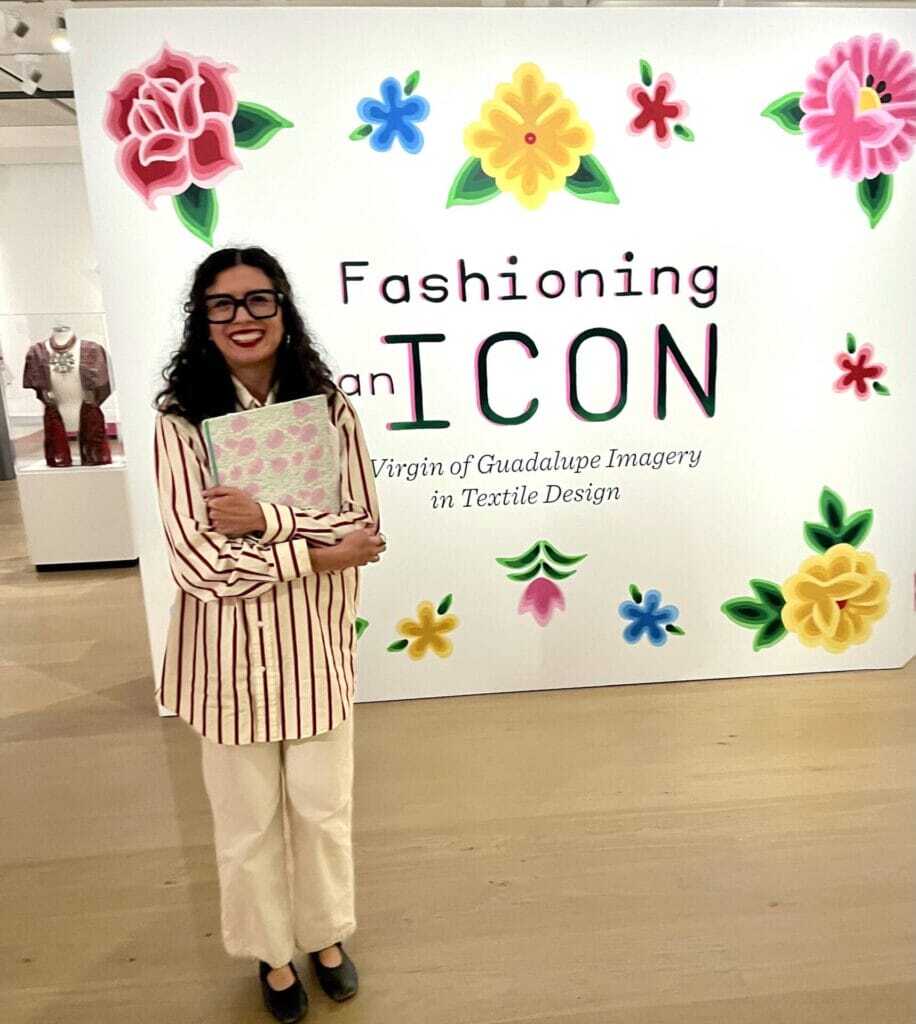
Fashioning an Icon is a perfect title for the exhibition of images of the Virgin of Guadalupe curated by Arianna Torres at the Mingei International Museum in Balboa Park. It includes the word Fashion, and the exhibition consists almost exclusively of 73 contemporary textiles mostly from the collection of Linda Hanna from Oaxaca, but it also including work by three local artists. Secondly the title identifies the Virgin of Guadalupe as an icon. What is an icon? An icon is defined by Merriam Webster as “a person or thing widely admired and recognized for having great influence and significance.” This definition fits the universally recognizable image of the praying Holy Mother in her blue start-studded mantel surrounded by a flaming mandorla. The image can be found on candles, T-shirts, tattoos, murals, and even fingernails. “I wanted to give a framework to the textiles that show this image as cultural expression with a complex history, whose message and meaning has changed over time,” Torres says.

According to the most popular story, the Virgin of Guadalupe appeared in 1531 to a Nahua man with the Christianized name of Juan Diego on the hill of Tepeyac in what is now Mexico City. During several apparitions the Virgin instructed Diego that a church be built on the site. She asked Diego to collect roses from the hillside and bring them to the local church leaders as proof of her appearance. Diego gathered and transported the roses in his tilma (cloak). When he unfurled his garment before the church leaders, it revealed not only the roses, but also a miraculous image of the Virgin of Guadalupe emblazoned on the textile. So, from the very beginning the image was associated with textiles. The church leaders were convinced and built a cathedral. The tilma from this story is displayed at the Basilica of our Lady of Guadalupe is in Mexico City, and her image has been connected with Mexican identity ever since.
The Virgin of Guadalupe’s Image appeared during the colonization of Mexico by Catholic Spaniards, who imposed their rule and their religion on the Native indigenous people. But her image was also used on banners for Mexican independence, and the Mexican revolution, and her skin is dark like that of the indigenous people.
The layered and contractionary significance of the image evolved with the times. This is reflected in the art displayed at the Mingei. It includes both indigenous and traditional techniques of application and embroidery even though all the textiles are contemporary.
A blue ruana, a poncho style overgarment, is woven on a traditional treadle loom with cotton thread.
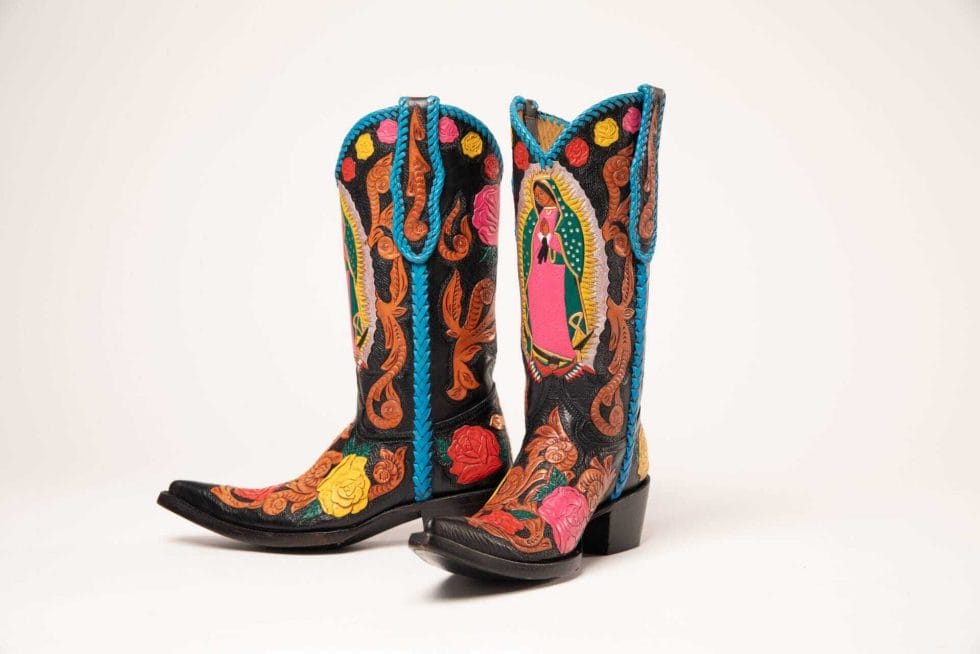
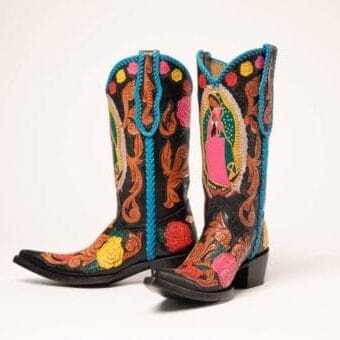
I coveted the cowboy boots by Odilón Castillo from San Miguel Allende. I would proudly wear these boots with the embossed leather image of the Virgin in a pink robe surrounded by yellow and red roses with stitched blue borders.
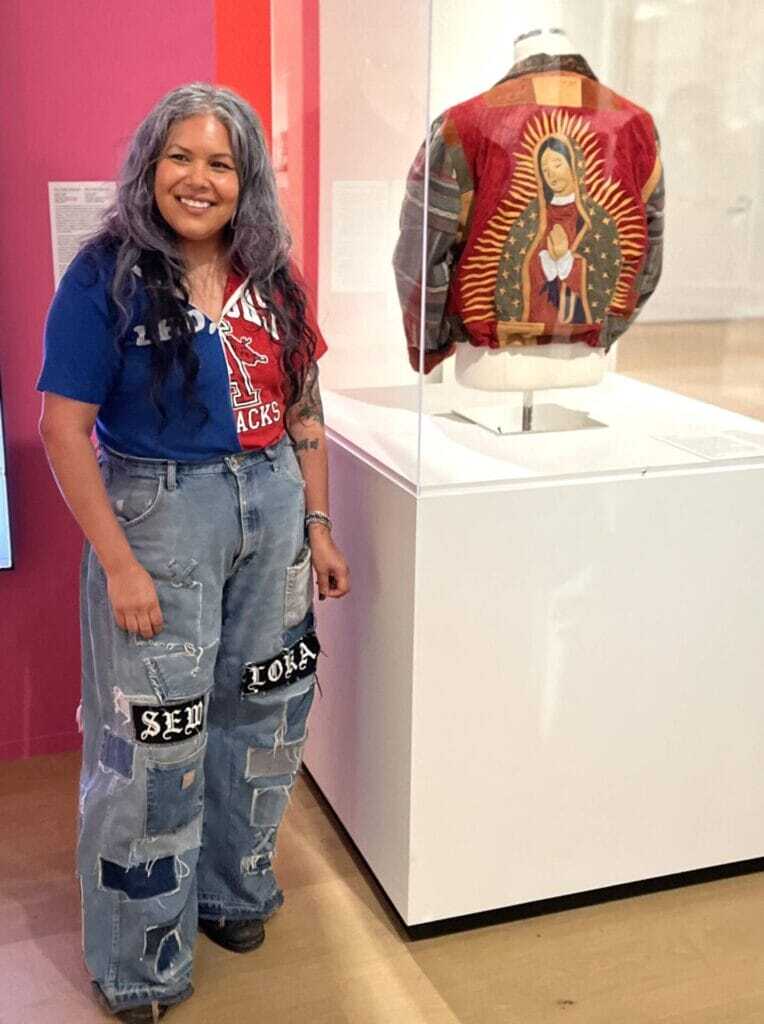
A centerpiece of the show is the jacket by San Diego artist Claudia Rodríguez-Biezunski (Sew Loca), from 2023. It’s made of various upcycled fabrics including suede, leather, and cotton flannel. “It was a challenge, and I like challenges,” the artist said. To lay out the jacket’s back in a mosaic style took eight hours and a lot of patience. The front consists of plaid upholstery and the inside is lined with fuzzy orange fabric. “To feel comfort, hope and faith – like a big hug,” Claudia said.
This exhibition emphasizes the connection between clothing and cultural identity, and invites visitors to think about the power and endurance of images we encounter, engage with, and even wear, in our daily lives. “The Virgin of Guadalupe’s representation is rooted in craft and complex history. As a cultural icon, she inspires so many artists to reinterpret her image in different styles, colors, and shapes–each interpretation bringing deeper meaning to her image. This exhibition is important because it explores what craft, clothing, and iconography can tell us about ourselves and our communities,” says curator Ariana Torres.
Programs:
Curator-Led Exhibition Tour
April 10, 2025 from 1:00pm – 2:00pm
Free for Mingei Members, $10-15 for Non-members
Stitch Together Workshop Series
May 9, June 13, July 18, and August 8 from 5:00pm – 7:00pm $15 for Mingei Members, $20 for Non-members
Woven Jewelry Workshop with Mónica Díaz Martínez
June 26, 2025 from 6:00pm – 8:00pm
$55 for Mingei Members, $65 for Non-members
Artist Gallery Talk with Mónica Díaz Martínez (En Español):
June 27, 2025 from 6:00pm – 7:00pm
Free for Mingei Members, $10-15 for Non-members
Historic Footprints – Native American Ledger Drawing from Fort Marion
April 12- August 17, 2025
In 1875, 73 Cheyenne, Kiowa, Arapaho, Comanche, and Caddo tribal members were taken as hostages and incarcerated without trial at Fort Marion in St. Augustine, Florida.
Native peoples of the Plains had traditionally drawn on buffalo robes, shields, tepees, and hides. They depicted images of battles, the hunt for buffalo, ceremonies, or important events. At Fort Marion repurposed accountant ledger books, bound papers typically used to organize financial transactions, were given to the incarcerated men and they began to draw in them. Ledger drawings, as they have come to be known, continued telling stories and recording history.
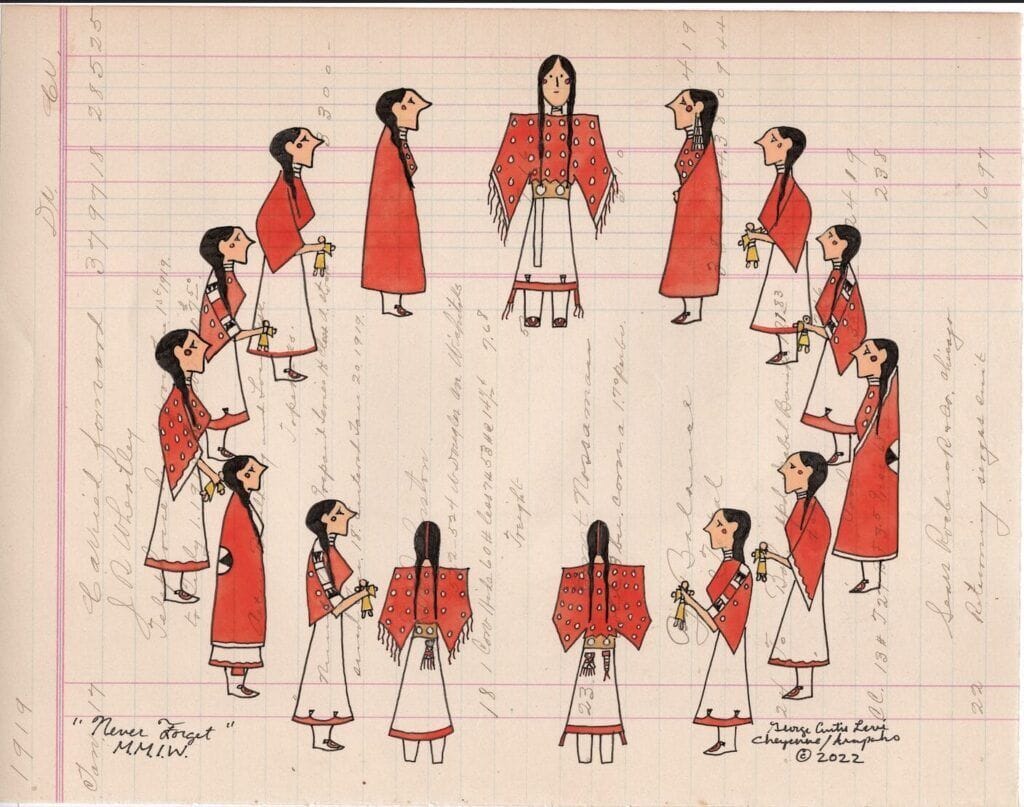
The historic ledger drawings feature scenes of the journey from Indian Territory (now Oklahoma) to Fort Marion, and life within the Fort. The prisoners began to draw what they saw around them: drills of soldiers in the fort, roof repair, ladies trying to shoot at a target with bow and arrow—and missing, the golden chair of the Fort leader. Drawings also depict life before imprisonment, with scenes of courtship, ceremony, hunting buffalo, raiding for horses, and new aspects of life on the reservation. Soon they “prisoners began documenting their own identity,” Emily Hannah, the co-curator of the exhibition says.
This exhibition is a collaboration between curator Ross Frank, a University of California San Diego professor of Ethnic Studies, his students, the Cheyenne and Arapaho Tribes, the Kiowa Tribe, and the staff of Mingei International Museum.
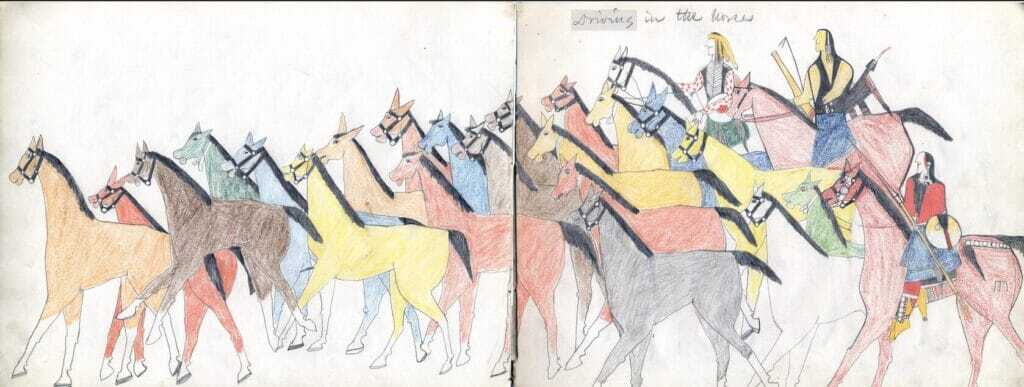
The drawings allow visitors to explore Native perspectives during a period of great duress for Indigenous people. The hostages incarcerated at Fort Marion preserved cultural continuity and creativity in the face of oppression and imprisonment; they survived, flourished, adapted new forms of expression, and represented their own experiences.
“We are proud to host and participate in the making of Historic Footprints, a project developed in collaboration with living and thriving members of Cheyenne, Arapaho, Kiowa, Comanche, and Caddo tribes,” said Jessica Hanson York, Executive Director and CEO.
Curator Ross Frank created a digital archive of ledger drawings all over the US. In the course of assembling the exhibition, Frank and Hannah went to Oklahoma to meet with the descendants of the original artists and they came to the Mingei in San Diego several times.
“The tribes shaped this exhibition,” Hanah said, “they approved every word in the text panels, and we asked their permission to show each drawing.”
Because the tribes never had possession of the ledgers, they didn’t just lose historic objects, they lost part of their history, which the digital archive can remedy.
I asked Hannah about her visits in Oklahoma, which she describes as very sober and moving. “The loss of the ledgers drawings and the imprisonment of the tribal member caused generational trauma,” she says. This exhibition aims to contribute to an act of healing
Contemporary ledger drawings refer to the visual language of the earlier drawings while addressing contemporary and historical subject matter. Contemporary ledger artists in the exhibition include George and Halcyon Levi, Dwayne Wilcox, Dolores Purdy, Gordon Yellowman, Wakeah Jhane, and others. They connect the stories and visual language of the historic footprints to the living and thriving Native nations of today.
Programs:
Historic Footprints Gallery Discussion | Indigenous Perspectives on Ledger Art, Culture, and Community Leadership with Curator, Ross Frank
May 3, 2025 from 11:30am – 12:30pm
Included with Mingei General Admission
Curator-Led Exhibition Tour
May 8, 2025 from 1:00pm – 2:00pm
Included with Mingei General Admission
Gallery Talk with Chief Gordon Yellowman
May 16, 2025 from 6:00pm – 7:30pm
Included with Mingei General Admission
Art Break Lecture with Ross Frank
June 6, 2025 from 10:30am – 11:30am
Included with Mingei General Admission
Across the Spooniverse, Stirs Up Imagery of Family, Celebration, and Tradition
April 12-August 17
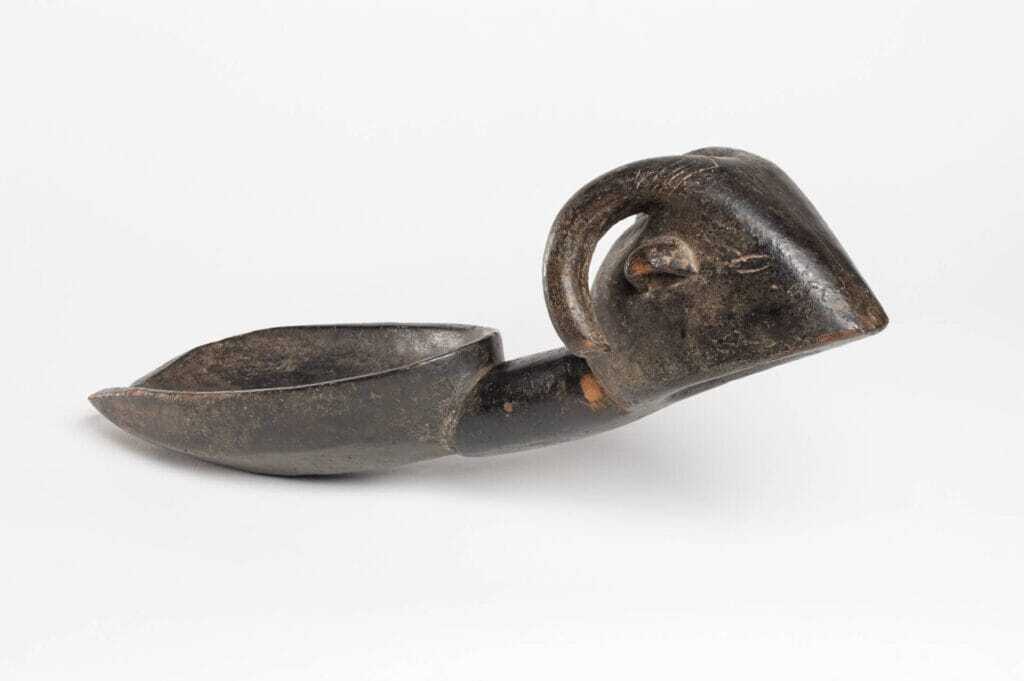
Through more than 100 spoons, the exhibition explores human creativity across regions and eras. Spoons are universally used objects and Across the Spooniverse explores how each object reflects a specific cultural context. They are used in families, community, celebratory preparations of food and drink, and the spiritual gestures of giving thanks for our nourishment.
Spoons are often cultural symbols of abundance and generosity. Sometimes the act of stirring, serving, or ladling is spiritually sacred. These spoons can be part of a blessing or a connection to the divine source of nourishment. “Spoons have symbolic significance; they are associated with feeding, nurture, generosity, abundance and making an offering,” said Dr. Emily G. Hanna, director of exhibitions and chief curator.” She continues “These objects are both functional and brilliantly artful. They symbolize concepts of abundance, generosity, and exchange. A spoon is so much more than a spoon!”
Programs:
Curator-Led Exhibition Tour
July 10, 2025 from 1:00pm – 2:00pm
Free for Mingei Members, $10-15 for Non-members
Spoon Carving Workshop
July 26, 2025 from 10:30am – 1:30pm
Free for Mingei Members, $10-15 for Non-members