
From the Dean Collection of Swizz Beatz and Alicia Keys at the Museum of Contemporary Art San Diego – April 18 to August 9, 2026
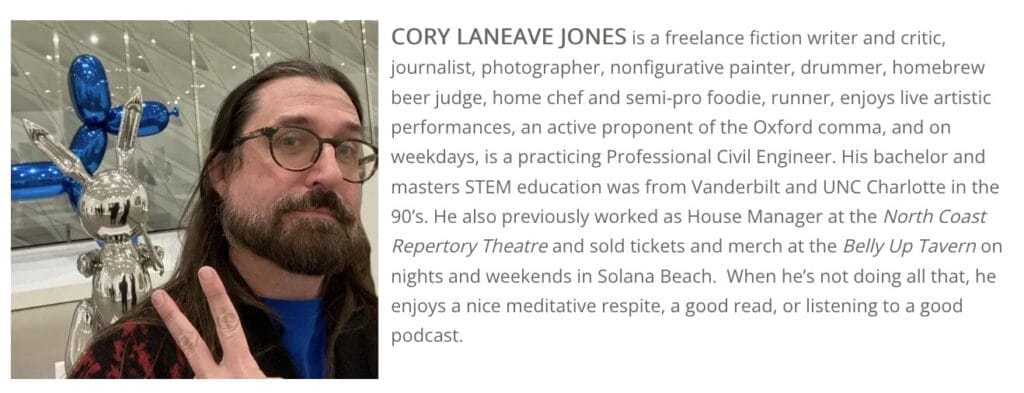
By Cory-LaNeave Jones
April 24, 2026

I. A Poetic Invocation
“Bringing the gifts that my ancestors gave,
I am the dream and the hope of the slave.”
— Maya Angelou, Still I Rise (1978)
There is a shoreline in La Jolla where the Pacific keeps its own archive—salt, wind, memory. Once, that shoreline refused certain bodies. It redlined them out, erased them from it’s horizon. Now, in a gesture both overdue and celebratory, those same bodies—rendered in paint, lens, textile, and sculpture—arrive monumental, undeniable, and singing.
Alicia Keys sang:
“She’s just a girl and she’s on fire
Hotter than a fantasy
Lonely like a highway
She’s livin’ in a world and it’s on fire
Filled with catastrophe
But she knows she can fly away”
Both Alicia Keys and her husband Swizz Beats arrive as Giants. This art exhibit is a fabulous survey class of Black art in America.
The works on exhibit carry with them a chorus: of mothers and daughters, of lovers and fighters, of Black women whose presence has always been both question and answer.
II. Becoming Giants: The Deans and Their Practice of Care
To understand Giants: Art from the Dean Collection, one must begin not with acquisition, but with relation. The collection assembled by Swizz Beatz and Alicia Keys is less a vault than a living room—a place where artists are not merely collected, but are also championed.


Alicia Keys’ Piano & “Two Techniques SL-1200 Turntables, Stanton SK 2F Battle Mixer, and Two Model 804 Transducer Speaker Cabnets. This PA system, known as the Hercaloids, was owned by the legendary DJ Kool Herc, one of the originators of hip hop. This system was played at a back-to-school party for Herc’s sister Cindy on August 11, 1973, the date now considered the birthdate of hip hop.” Photo by Susanna Peredo Swap
Organized by the Brooklyn Museum and now making its West Coast debut at the Museum of Contemporary Art, San Diego; the exhibition gathers over 130 works by 37 Black American and diasporic artists from Africa, Europe, the United States, and the Caribbean. It is, as the Deans articulate, “by the artists, for the artists, with the people.” These collectors are famous for hip hop (Swizz Beats makes the beats) and for pop (Alicia sings in the key of our lives). And you can hear that as you enter this show, with a grandiose foray into their lair.

As you enter on the wall to the right, you see a pair of paintings of motorcycles. They rise up into the air, appearing as if about to high five, or maybe high wheel. These pieces say a number of things about the show. They celebrate excitement, but they also help you reflect on the ability to be seen.
Sherald, who in July 2025, decided not to display her “American Sublime” exhibition at the Smithsonian National Portrait Gallery because the current leadership wanted to remove or alter her painting Trans Forming Liberty.
Sherald said “It’s clear that institutional fear shaped by a broader climate of political hostility toward trans lives played a role…When I understood a video would replace the painting, I decided to cancel, The video would have opened up for debate the value of trans visibility and I was opposed to that being a part of the ‘American Sublime’ narrative.” Sherald’s works always invoke a sensitive beauty of her subjects.
I asked the local show Associate Curator for MCASD, Amy Crum, a few questions about the exhibition.
With the placement of the Amy Sherald pieces front and center, I mean, to me it says something about America’s Fight Against Censorship and exclusion and removal of others. What was the impact that you were intending for that to have as the starting point?
Amy Crum: “I hadn’t thought about its kind of resonance with conversations around censorship given her recent show, but I love that idea. I think more than anything, it kind of set the stage for the show, both in terms of the sort of grandiosity of the figures. We tried to hang them pretty high to kind of amplify the…almost aerial nature that they’re capturing. I think again, this relationship to historical ways of representing political figures and equestrian sculpture, monuments, that kind of thing. It felt sort of like the play on art historical references, the same time documenting the sort of niche culture of these Baltimore-based riders and the interplay between those two things and the idea of like, this is worthy of this type of painterly treatment kind of thing? And the statement that that’s making felt like a good way to set the stage for the show.“
As I said, their positioning also appears as you would expect to see at the entrance gates to a grand City, perhaps the Lion Gate at Mycenae, Greece dating to c. 1300 to 1250 B. C. E.

They shout out in a welcome embrace similar to a cadence we have heard on the radio for almost thirty years
“To my peoples, if you hear me, where you at, throw your dubs in the air
And wave ’em like you just don’t care” – TQ “Westside”

Having worked extensively with photography and image making, how do you read the photographic works in this exhibition, particularly Jamel Shabazz, Gordon Parks, as opposed to the photo realism I typically am familiar with from Barkley Hendricks, in relation to memory and staging?
Amy Crum: “I feel like I see the collections of photography in this show as kind of relating to this larger legacy and conversation around self-representation, whether that be yourself as the artist, but also community. And so in terms of its relationship to photorealism, I think I guess I would say that photography in this show feels like one strategy and photorealist painting feels like another strategy in terms of exploring issues related to representation.”


As celebrities, the Deans can also support other artists. Both by collection and by commission. There are two massively sized portraits of the couple, as painted by Kehinde Wiley. They are grand and they are current and they are wrapped in a bow of floral filigree. Adjacent we see the couple posing in garb that reminisces that of the Black Panther party’s esthetic. This photo taken by Jamel Shabazz is a nod to the one taken by Gordon Parks of the Black Panther Party’s Minister of Information, Eldrege Cleaver and his wife Kathleen.
These are not props but portals—gestures toward the idea that cultural stewardship begins in lived experience.
“I have tried to mislead you. I am not humble at all. I have no humility and I do not fear you in the least. If I pretend to be shy, if I appear to hesitate, it is only a sham to deceive. By playing the humble part, I sucker my fellow men in and seduce them of their trust. And then, if it suits my advantage, I lower the boom – mercilessly. I lied when I stated that I had no sense of myself. I am very well aware of my style. My vanity is as vast as the scope of a dream, my heart is that of a tyrant, my arm is the arm of the Executioner. It is only the failure of my plots that I fear.”
― Eldridge Cleaver, Soul on Ice


So, “Hometown Heroes” in San Diego, I think most people tend to think that would refer to either the military or the Padres, but you placed Chicano culture front and center and then that’s juxtaposed with Andrea Chung’s cyanotypes. Those of course are titled Filthy Water Cannot Be Washed. What does this say about our cultural gaze on our diverse local community and inter-border struggles with the Tijuana River?
Amy Crum: I hadn’t thought about Andrea’s work in relation to the Tijuana River, but that’s a good (thought)… I think the fact that you’re making that connection means that we’ve done a good job in terms of initiating dialogues between artists that maybe we didn’t even expect. I think because Andrea’s work is looking to the Caribbean so frequently, but our proximity to the Pacific Ocean, the fact that you can even see the ocean through the windows in the gallery, feels like there’s a universality there in terms of connecting us across oceans. But I think the salience of her work, using the natural environment to create an allegory for the legacies of colonialism, with the lionfish being an invasive species, to me, I was thinking about the ways in which that might be in dialogue with some of the images in the “Hometown Heroes” or the photographic works drawn from the Dean Collection that are speaking to the encroachment of gentrification in the Logan Heights neighborhood or in San Diego more broadly and how those parallels that one might draw between colonialism and gentrification, one rooted in an urban setting versus the natural environment kind of thing. But in terms of struggles around resources and water and environment, I feel like all of those things exist in that room too.
One might say: we tell ourselves stories in order to live. The Deans collect in order to ensure those stories endure.
III. On the Shoulders: Lineage and the Architecture of Influence
The exhibition’s second movement—Nanos gigantium humeris insidentes (Bernard of Chatres) “On the Shoulders of Giants”—is both homage and argument. Here, figures like Jean-Michel Basquiat, Gordon Parks, and Kwame Brathwaite anchor a lineage that is not linear but tidal.
Basquiat’s frenetic crowns, Parks’ cinematic empathy, Brathwaite’s Black-is-Beautiful insistence—these are not relics but active agents. They speak across time, we are next greeted with a pool party celebration by Derrick Adams and some beautiful seascapes by Barkley Hendricks.


Similarly noticed by photographers Jamel Shabazz and Gordon Parks. Shabazz, perhaps most famous for his street aesthetic. Parks, who was both a photojournalist and composer, known for iconic photos of imagery during the civil rights era and later directed the films Shaft, Shaft’s Big Score, and The Learning Tree.
Speaking of colorful artworks, I direct you to the works of Odili Donald Odita.

One might observe: Black art here is not marginal—it is the center, the axis around which meaning turns.
IV. Giant Conversations: Critique and Celebration
The exhibition’s core unfolds in a dialectic: critique and celebration.
On one wall, Hank Willis Thomas flies a folded flag in front of a silver statue of struggle. But the flag is not red stripes, it is a pale faded green, instead of the red stripes of the American flag they are a reflection of the millions of Black Americans who are now subjugated into the prison industrial complex. Nearby, Jamel Shabazz captures Black joy in 1980s New York—playful, stylish, irrepressible.

Derrick Adams’s buoyant pool floaters insist that leisure itself is political—a reclaiming of space, of ease, of breath. This piece reminds me of several pool-side paintings that I recently saw at The Hammer Museum by Noah Davis.

This duality echoes in the music that underscores the show—Marvin Gaye’s soul threading through the galleries like a pulse.
“Listen my brothers, listen my sisters
(Never said we couldn’t get down)
Oh, love the Lord
Lalala Amen ah” – Marvin Gaye, “Life’s Opera”
V. Women at the Center: Black Feminine Presence as Force
To walk through Giants is to encounter Black women not as subjects but as sovereigns.

Consider the monumental intervention by Mickalene Thomas—a 25-foot reimagining of Le déjeuner sur l’herbe. Where Édouard Manet once scandalized with a nude white woman, Thomas replaces her with three Black women—clothed, adorned, self-possessed.
This is not revision; it is reclamation.
A couple years back, Jeffrey Dietch held a little exhibit that had 35 artists different interpretations of the famous Manet painting including a Nina Chanel Abney version, this Mickalene Thomas piece, a Kehinde Wiley, a Jeff Koons and other contemporary artist luminaries.
In the cadence of Toni Morrison, these women are not “othered”—they are the measure. They define the aesthetic, the ethical, the possible.
For Black American women, the exhibition offers not representation but recognition. For young girls in San Diego—particularly those navigating spaces historically resistant to their presence—it offers a mirror that does not distort.
VI. La Jolla: Geography, Memory, and Reckoning
That this exhibition unfolds in La Jolla is not incidental—it is seismic.
Once a site of exclusion through redlining and restrictive covenants, La Jolla becomes, through Giants, a site of return. The works do not ask permission; they assert belonging while reflecting on struggle.

Arthur Jafa’s Big Wheel is layered, just as his video works. What is the meaning of looking at the massive tire that you can only imagine is from an large vehicle that is used to move tons of earthen rocks in grading and mining operations. But this tire is wrapped in chains. You might think for a second, Ice Road Truckers, yes you have to put chains on your tires to gain traction in the snow and ice. Chains can also reflect on the chains of enslavement and of working on a chain gang. The act of crushing frozen white powder may have been on Arthur’s mind.

Adjacent to this are a trio of works by Titus Kaphar, who is famous for his use of literally cutting out portions of a portrait to assist the rest of the world to better understand what erasure feels like. In this triptych, he uses moments of change in different periods of transition: Muhammad Ali’s 1965 “phantom punch” defeat of Sonny Liston, a Renaissance styled portrait of the Virgin Mary, a detail from “The Death of General Wolfe (1770) by Benjamin West, depicting the Seven Year’s War between the indigenous nations and Frenchmen, and a detail from John Singleton Copley’s “Watson and the Shark” (1778), depicting sailors fighting sharks while rescuing a man overboard.
One might say: history is not the past—it is the present we inhabit. And here, the present is being rewritten.
For San Diego audiences, the exhibition is both invitation and challenge: to see, to reckon, to expand.
VII. Soundtrack as Scripture: Alicia Keys and Swizz Beatz
Throughout the galleries, one hears echoes—not literal, but lyrical.
Alicia Keys sings:
“Some people want it all / But I don’t want nothing at all…” (If I Ain’t Got You, 2003)
These are not merely songs; they are theses. They articulate a vision of Black womanhood that is both vulnerable and invincible.
Swizz Beatz, architect of sonic urgency, offers a different register:
“Ruff Ryders’ anthem—stop, drop…” (Ruff Ryders’ Anthem, DMX, 1998)
His production—percussive, insistent—mirrors the exhibition’s own rhythm: a refusal to be ignored.
“Oh, no, that’s how Ruff Ryders roll!” (ibid.)
Not Teddy Bear Roosevelt’s Rough Riders, this is for the G’s like Snoop Dogg and the Regulators like Warren G and Nate Dogg.

Together, the couple’s music and their collecting form a continuum: culture as both creation and curation.
VIII. From Brooklyn to the Pacific: Institutional Bridges
The role of the Brooklyn Museum is crucial. As the exhibition’s origin point, it situates Giants within a broader institutional commitment to diversifying narratives and audiences.
Curated by Kimberli Gant, the show’s migration to MCASD is not merely logistical—it is ideological. It extends the conversation westward, insisting that Black & Diasporic art is not regional but global.

The exhibition, it insists on black joy alongside critique. Was there a concern that joy when institutionalized risks being misread as resolution rather than resistance?
Kimberli Gant: No, I don’t think so because I think, just as a society, we haven’t accepted or thought of rest, relaxation, celebration as resistance yet. And I think we still fight against it. We fight against thinking of art in that way. So I think it’s a good reminder that it’s doing both things. Our day-to-day lives can be so heavy. So, when you are able to find those moments of joy within that, it is worth celebrating. And so I think this is one of the funny things about when you’re curating, you have to kind of create a narrative. And so I had to kind of place the artist within these two ideas. The works are doing both things. They’re not separate in that way. We had to make it easier for the viewer to kind of get around these ideas.
But now certain works I think are more openly critiquing more than they are celebrating, but, I think the artwork itself is still celebrating the beauty of the art. And so that I think is a way to kind of think about, I can still have a very intentionally conscious statement about what’s happening in the world, but showed in a way that is still visually appealing.

There’s a scale, as you mentioned to many of these works, literal and conceptual, it feels defiant. So do you see monumentality here as corrective to historical erasure or something a little more complicated? And I guess the second part of that is bringing it here in Southern California, giants, was there intention for that to be Juxtaposed with the MOCA Geffen having the Monuments Exhibit?
Kimberli Gant: “Well, I don’t think that was intentional necessarily. I think it worked out that way, which is amazing. But I think a lot of themes that are coincidentally coming out of monuments are coming out of here where they’re both dealing with the idea of not just monuments for the sake of scale, but what does that mean when we think about the scale? There’s a reason why we had a giant presence show and called it Giants because the idea was that you cannot miss these words. And I think Monuments are done in a similar way.
You cannot not see them.
You can ignore them if you choose. And just even when they’re made, they’re built to be these anchors in a location and the works themselves can oftentimes be anchors within a space so that you are always reminded these artists created these large objects that you should see, that you should feel, that you should engage with.
And I think also considering that sometimes artists don’t always get the opportunity to make something of such massive proportions because of obviously just like studio size, resources, funding. So when you get to do that, you are leaving a mark in a very intentional way. And so I think it is … I think saying (it) is corrective might be too simplistic, but I think it’s all of these ideas wrapped up and in the legacy of what large means…
Why do people have massive homes?
Why do people have massive cars?
They want to be seen.
No, for some it’s just because they want to show off, but obviously I think for artists it is, I had the opportunity to create something that maybe I didn’t think I could create before that will leave a legacy that will also maybe even cause some challenges in terms of having to show it because certain paintings, we couldn’t continue on the tour because they were so big.
But there’s a defiance in that. The fact that you’re just like, “No, I’m going to make something so big. I’m going to make it complicated for you to put it on the wall.”
And yet someone still goes like, ‘I want that because what I feel and see and experience when I see that, it needs to be preserved in time.‘
During the current cultural threat. How we’re going to think about public art in the future. What are we going to be able to do public art? Is public art going to go in many ways like it was before? Is it going to be a form of resistance as much as socially accepted propaganda? It’s going to be all those things.“

What does it mean to curate Black & Diasporic art in an era when visibility is increasing, but understanding often lags behind?
Kimberli Gant: “I guess it means more to me that it’s a reminder that people of the African diaspora have been here, are here and will continue to be here. I would say it’s more about, we know that art is continuously attacked for whatever reason. So at the end of the day, it’s about making artistic presence known and showing the diversity of perspectives of artists and images that can be a part of that and showing work by artists of the African diaspora, showing images of Black people, even if they aren’t made by (African or African American) artists is all important because we are a part of the world. We’re a part of society. So I think like with anything, you want to see that you exist and that people acknowledge you exist and that it’s important to always see all of us in some way, shape, or form.“
It’s like that book of poems by Gwendolyn Brooks, the Bronzeville, right? I know those great illustrations by Faith Ringold right? It’s that it’s reaching children, letting them see that they exist.
Kimberli Gant: “And we’ve always existed and will continue to exist. That’s the other thing. I think it’s not just seeing the past, it’s like the present, and the future.“

IX. Popular Culture and the Politics of Visibility
The Deans’ work resonates beyond museum walls. Consider Kenya Barris’s inclusion of Knowledge Bennett’s Moment of Silence in his TV series #BlackAF. Such gestures collapse the boundary between high art and popular media.
They democratize access.
They insist that Black art is not niche—it is necessary.
X. Coda: Toward a Future of Giants
In the end, Giants is less about scale than about stance.
Not all works have to be a large as a Rothko or Anselm Kiefer. But large works are fun, as Mickalene Thomas and Kehinde Wiley show us.
This collection asks, like the exhibit curated by The Brick and MOCA Geffen in Los Angeles: who gets to be monumental? Who gets to be remembered? Who gets to take up space—on canvas, in history, in La Jolla?
It answers: those who have always been here.
As Langston Hughes said in his essay that some marked as the cornerstone of the Harlem renaissance:
“We younger Negro artists who create now intend to express our individual dark-skinned selves without fear or shame. If white people are pleased we are glad. If they are not, it doesn’t matter. We know we are beautiful. And ugly too.”
Existence isn’t always pretty, but sometimes it is. Black Joy is a beautiful thing. And the Dean’s Giants collection speaks to the all the varieties of life of the African diaspora and celebrates the joyous spectrum of colors that express the heart and soul of the artists on display.
…..
Giants is on display at MCASD until August 9, 2026. MCASD is located at 700 Prospect St, La Jolla, 92037 and it is open Thursday – Saturday, 11AM – 7PM and on Sundays from 11AM – 5PM. Tickets are $25 for general admission, $20 for San Diego County and Tijuana Residents, $15 for students, educators, and adults who are 55+, and free for MCASD members and those who are 25 and under.