June 4, 2026
In Kyoto,
hearing the cuckoo,
I long for Kyoto.
— Matsuo Bashō, In Kyoto … (translated By Jane Hirshfield, The Poetry Foundation)
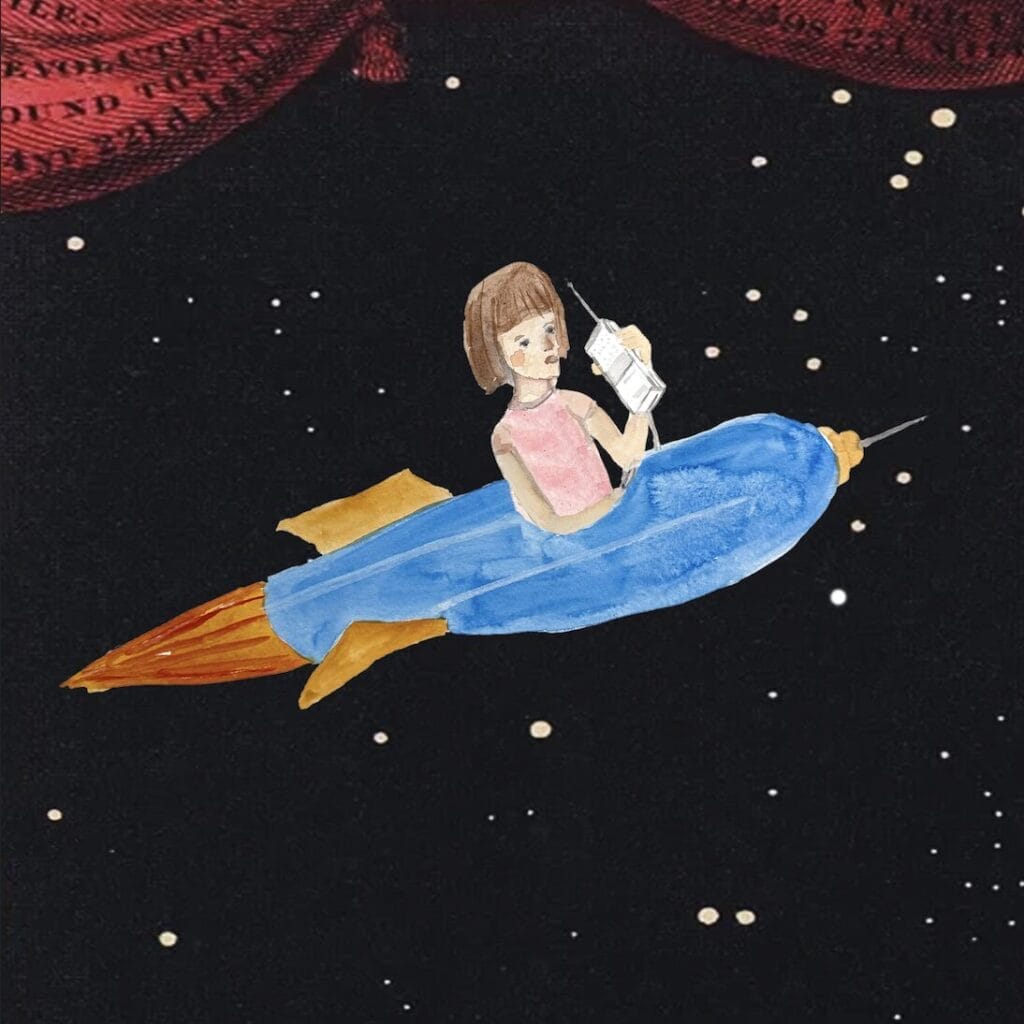
L’histoire de la musique atmospherique has always been a history of distances. Sound waves crossing the boundaries of air space.
Long before anyone called it “shoegaze,” before guitarists bent over pedalboards like medieval alchemists tending to glass beakers, Erlynmeyer Flasks, spiral coil reflux condensers and distillation heads – these alternative medicine practitioners moved the chemistry of electromagnetic waves and distortion. American musicians were already searching for ways to make sound feel larger than the room in which it was begun.
The Delta blues stretched loneliness across railroad tracks and cotton fields. Electric Chicago blues transformed grief into amplification. Rock n Roll transformed and birthed alongside Rhythm & Blues, Gospel, Country, and Funk – the vibe-modifying wah-wahs, Dirt pedals like the ProCo RAT and EQD Plumes, Modulators like the BOSS SY-1 and EHX Superego, and sonics mixed with keyboards. By the late twentieth century, bands such as My Bloody Valentine, Slowdive, Cocteau Twins, and Ride learned how to bury language beneath crashing waves of reverb, creating songs that felt less sung than remembered.
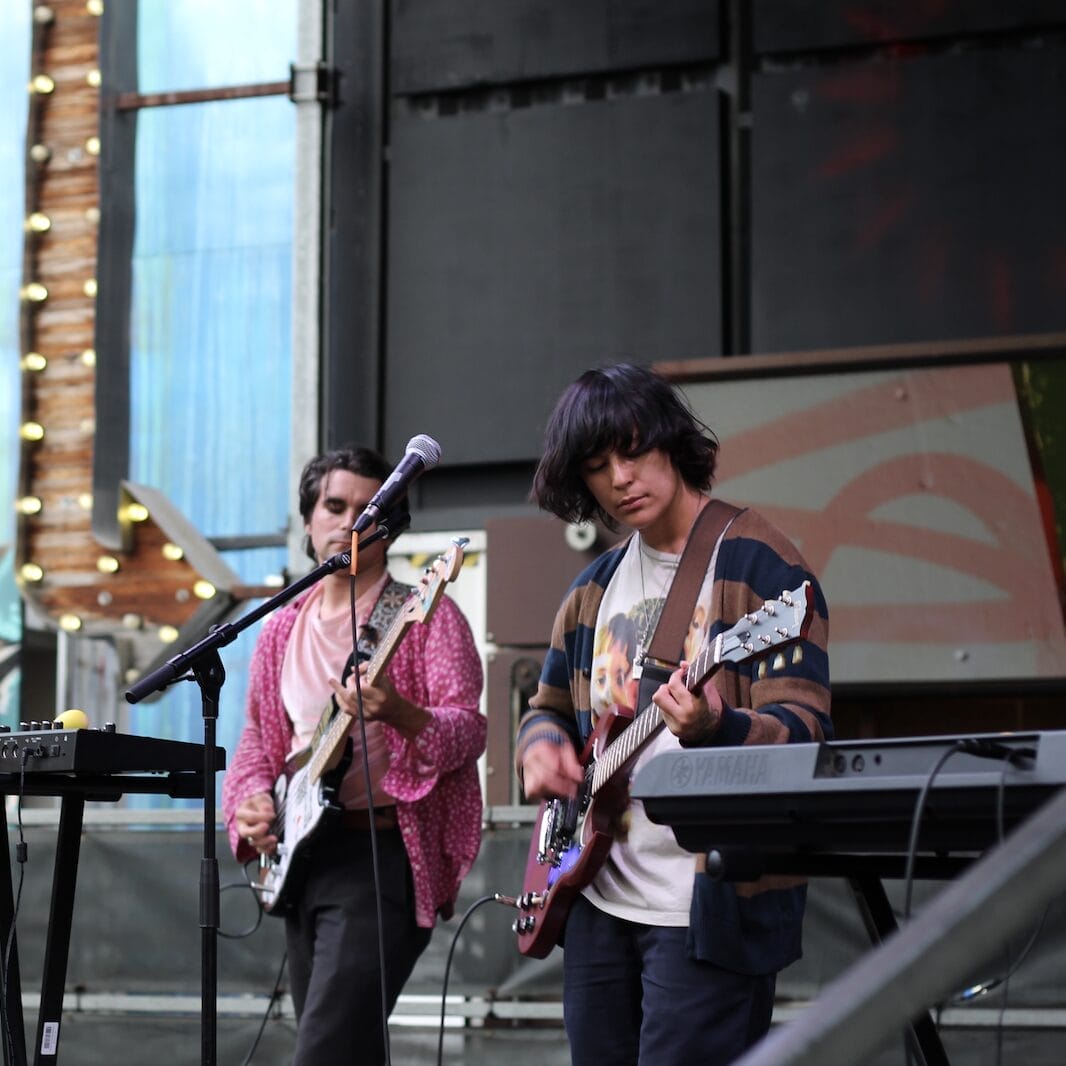
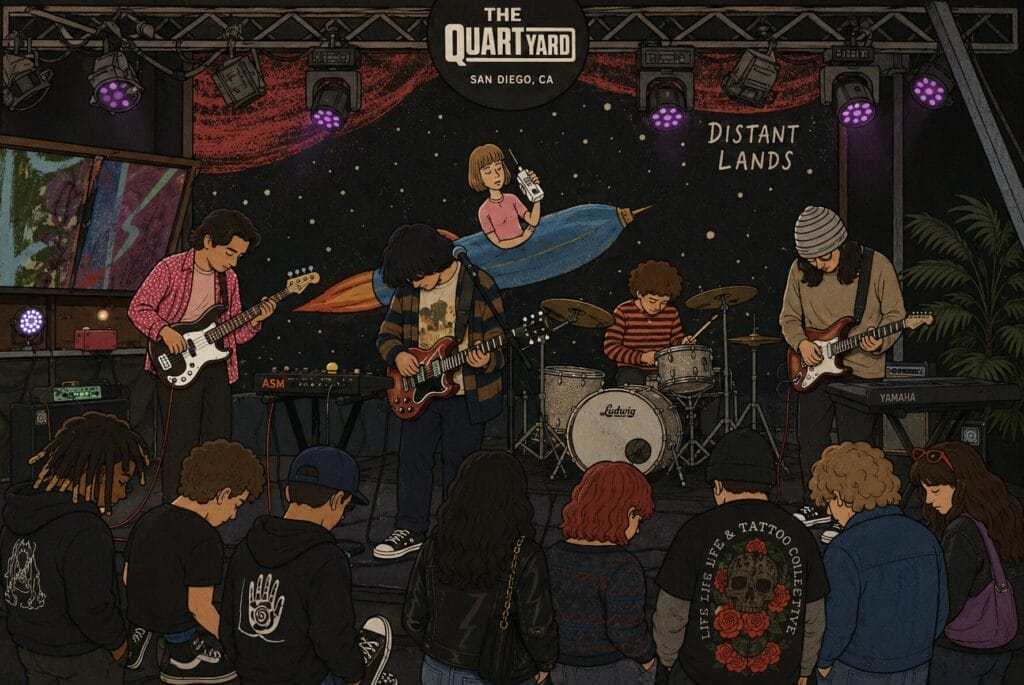
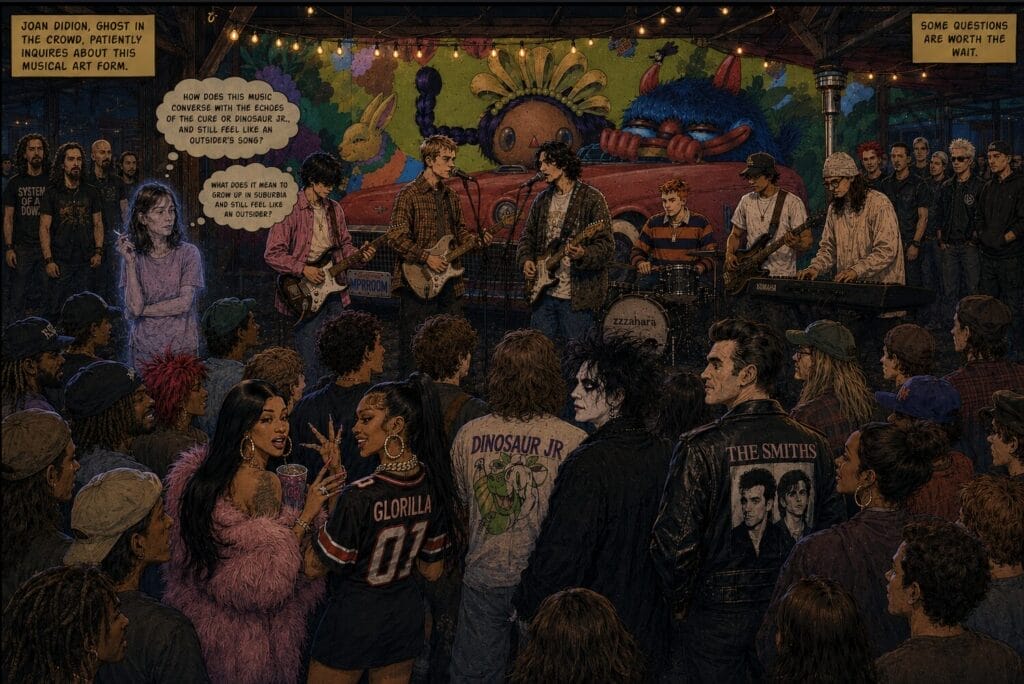
On a mild evening at the Quartyard in downtown San Diego on the evening of May 26, 2026, rising Los Angeles artist zzzahara demonstrated why that lineage remains alive and evolving.
The venue itself felt like a fitting metaphor. Containers, asphalt, market lights, and open sky converged into a temporary cool people’s village within a dense city. A diverse crowd gathered early—young punks in patched denim, indie-pop devotees in vintage wear, couples dressed for a night downtown, older music enthusiasts who looked equally comfortable at jazz festivals and underground rock clubs. The audience reflected Southern California itself: culturally mixed, stylistically fluid, and united less by genre than by curiosity.
By the time zzzahara took the stage opening for Yot Club, the crowd had already begun moving toward the front rail. What followed was not simply an opening set. It was a demonstration of where independent (indie) music appears to be heading.
Songs from the Liminal Spaces
Before you became a cloud, you were an ocean, roiled and murmuring like a mouth. You were the shadow of a cloud crossing over a field of tulips. You were the tears of a man who cried into a plaid handkerchief. You were a sky without a hat. Your heart puffed and flowered like sheets drying on a line.
– Sandra Cisneros, Cloud
Born and raised in Los Angeles’ Highland Park neighborhood, Zahara Jaime—known professionally as zzzahara—occupies a fascinating position within contemporary independent music. Mexican-Filipino American by heritage and deeply connected to Los Angeles’ alternative scene, Jaime emerged first through collaborations with Eyedress in the dream-pop project The Simps before establishing a distinctive solo voice.
That voice has evolved remarkably across three major releases.
The earliest material collected on Simp.wav reveals an artist fascinated by desire, uncertainty, and youthful obsession. Songs such as “Up on Fig” and “Straight Crushes” revolve around longing, infatuation, and fleeting intimacy. Throughout the lyrics, relationships appear simultaneously intoxicating and unstable. The emotional landscape is populated by late-night encounters, unresolved attachments, and the uneasy recognition that love can become dependency.
By the time of 2022’s Liminal Spaces, those themes deepen considerably. “They Don’t Know” transforms romantic secrecy into a meditation on visibility itself. The repeated refrain—”They don’t know about us“—suggests not merely hidden love but the burden of existing outside accepted social narratives.
Elsewhere, tracks such as “Possessive” expose the darker currents beneath attachment. Desire becomes obsession; devotion shades into dependency. Yet zzzahara never presents these emotions as moral lessons. Instead, they appear as lived experiences, documented honestly and without judgment.
And there is a tinge of grunge mixed with Satre’s existentialist conundrums in Bulletproof’s opener
“In this life, there is no forever…”
This song has that feel of the early 80’s first-wave music, with good bass and heavy synth keys and wispy vocals, a la Joy Division, The Cure, The Smiths, with a droning walking bass line playing in the beginning with those keys you expect to see in an episode of an 80’s chase scene perhaps in The Equalizer (the original one). In “Get Out of LA,” there’s a good swing backbeat and the continuance of zzzahara’s slow drawn-out slurring of words for emphasis in a childish pouty way.
Tender (2023) marked another evolution. The title itself suggested a slowing down, an inward turn. Heartbreak remained central, but the emotional register shifted from urgency toward reflection. Songs unfolded like diary entries written after the storm had passed.
“Kensington” may not reflect on our local neighborhood that sports favorites like Kensington Café and Ponce’s, but what it does is revive a jazzy repetitious call-and-response scat:
“And I was like
Do do do do do do do do do do do do do
And she was like
La la la la la la la la la la la la la
And I was like
Do do do do do do do do do do do do do
And she was like
La la la la la la la la la la la la la”
Listening across these records reveals a remarkable consistency: zzzahara’s music repeatedly returns to three intertwined themes—love, self-discovery, and survival.
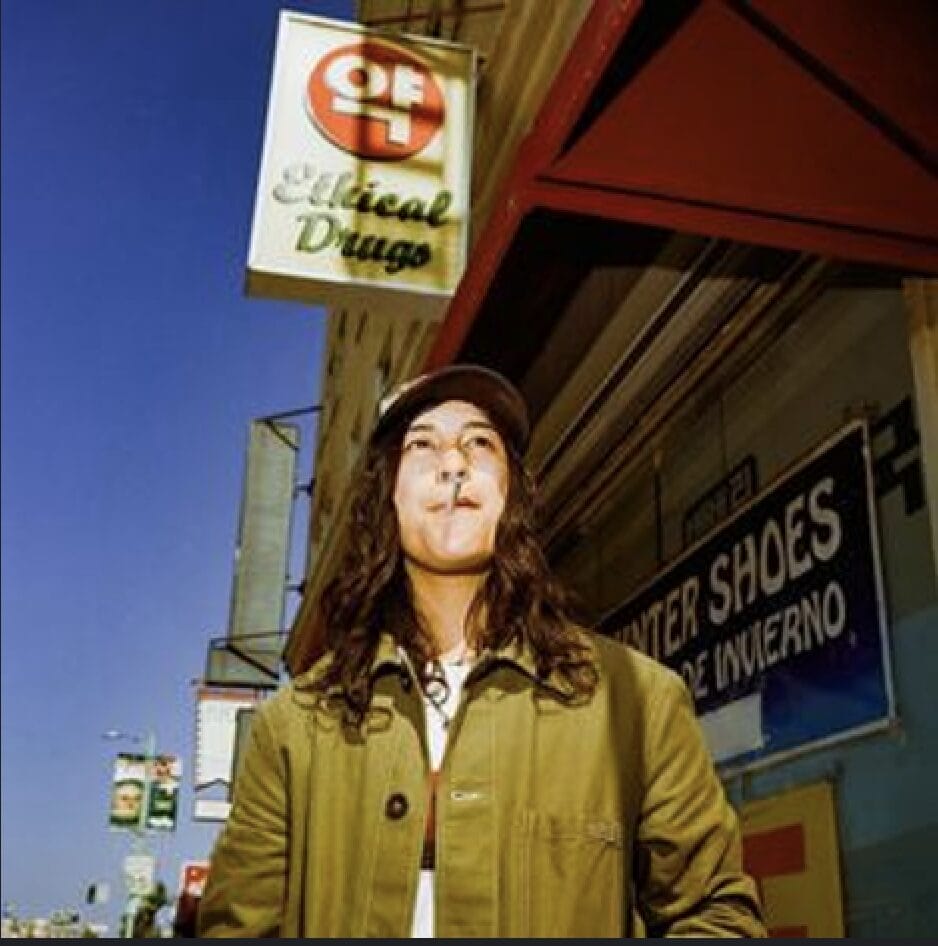
Figure 4. Spiral Your Way Out Album Cover
Spiral Your Way Out
I don’t give second changes anymore
I’ve learned my lesson once or twice
and maybe that’s too harsh to say
but for once, I’m taking my own advice
-Celia Martínez, November 13, from Diary of a Romantica, Volume I Lovers Forgotten
The previously released album, Spiral Your Way Out, represented a standard emo melodramatic escalation. The record emerged from what Jaime described as an emotional rock bottom—a period defined by heartbreak, confusion, anger, and self-reclamation. Where Tender often felt meditative, Spiral Your Way Out sounded more urgent and volatile.
“In Your Head” reflects again on lost loves and begins rocking with a tune that sounds like the groove from Dinosaur Jr.’s Start Choppin’ just revved up a bit, and with a smoother, less crackly-crunchy vocal.
On your own
There again
All alone
Like I said
I’m living in your head
I’m living in your head
I’m living in your head
As you are in mineThis part reminds me of that earworm refrain from the classic Cardi B. and Glorilla dis-track collab “Tomorrow 2” where she reads her nemeses “I stay on her mind, I got condos in that [lady’s] head.”
Rather than seeking neat resolutions, the album embraces contradiction. Its central insight is that growth is rarely linear. One hears this philosophy throughout zzzahara’s body of work. Relationships become sites of revelation and destruction. Emotional collapses become his artistic fuel. Self-understanding arrives not through transcendence but through persistence.
The title itself functions almost as a manifesto. Instead of climbing out of despair, one spirals through it. The motion remains circular, messy, imperfect—and yet somehow progressing forward.
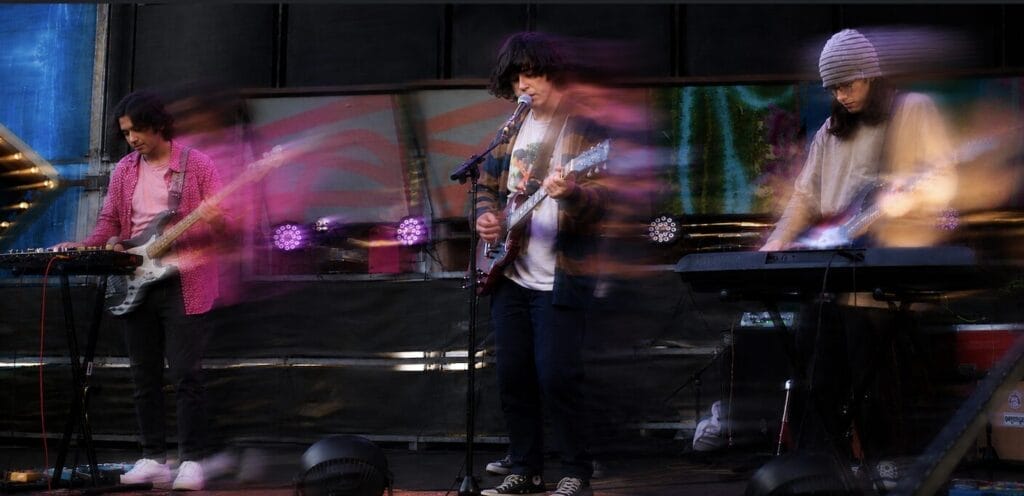
At Quartyard: The Sound of Controlled Collapse
Live, these themes become physical. The defining characteristic of zzzahara’s performance was not volume, though there was plenty of that. Nor was it technical virtuosity, though the musicianship was consistently impressive. The defining characteristic was texture.
Guitars arrived in overlapping layers of chorus, distortion, and delay. Vocals floated above and inside the instrumental fabric simultaneously. Songs seemed less interested in presenting themselves than in enveloping listeners.
Shoegaze has always been misunderstood by critics who mistake obscured vocals for emotional distance. In reality, the opposite is often true. The voice is buried because the feeling is too large. At Quartyard, zzzahara demonstrated this principle repeatedly. Lyrics emerged and disappeared beneath waves of sound, creating a sensation closer to memory than conversation. The result felt immersive rather than inaccessible.
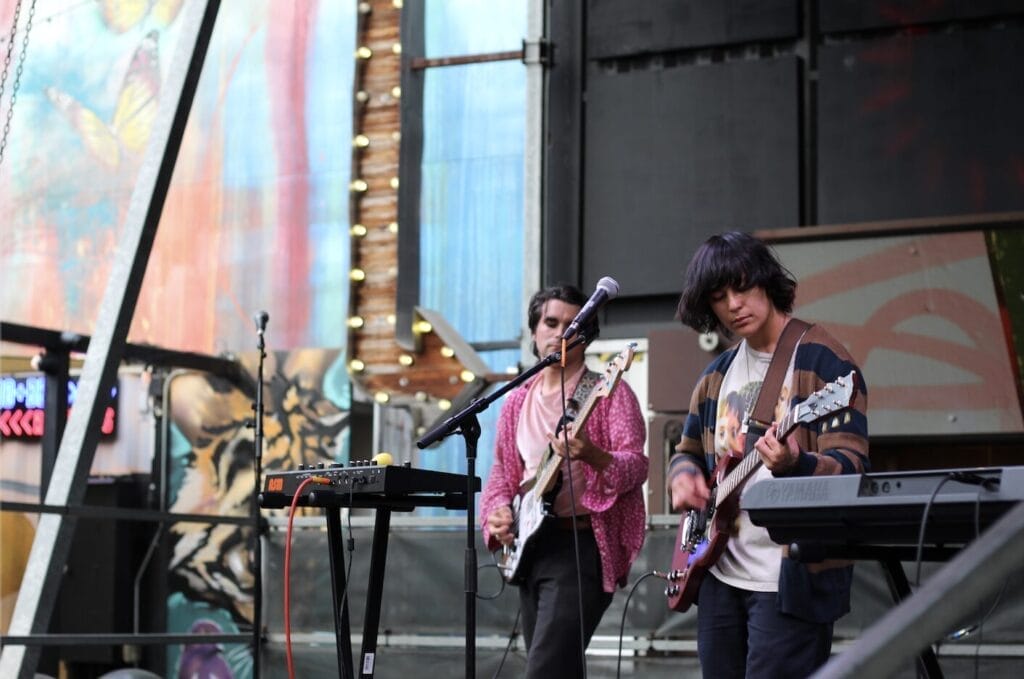
Conversations After the Set
The drummer, Ben, emphasized the band’s emotional range during a brief conversation following the performance:
Cory: “What’s your favorite part of drumming for Zach?”
Ben: “It’s just fun. It’s fast.”
Moments later, he elaborated:
Ben: “Some songs are really fast. Some songs a little bit slower… It requires a lot of different types of feeling and chops.”
That assessment proved accurate. The set moved fluidly between urgency and contemplation, never settling into a single mood for long.
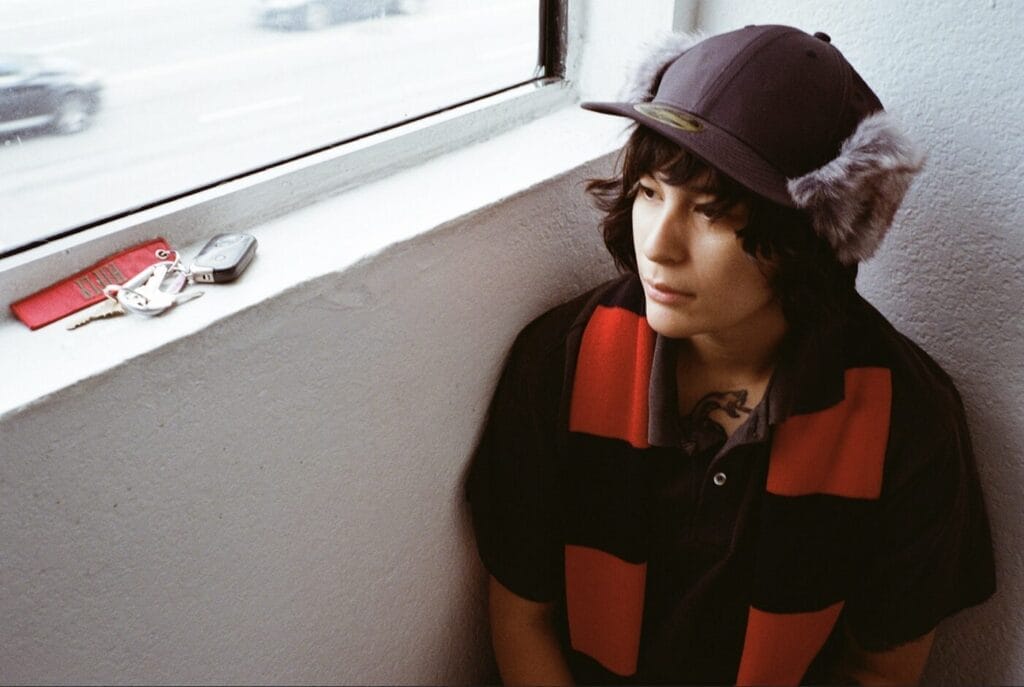
Speaking with Jaime, our exchange revealed the remarkable simplicity beneath his creative process.
Zzzahara: “I used to play in like “Screamo-emo” bands before. [the first one was called] Conquering a Poland.
Cory: “So what’s your favorite part of songwriting?”
zzzahara: “My favorite part, I don’t know. Honestly, just making the music. I feel like I write songs all the time so I think it’s just fun for me.”
Cory: Do you just wake up hearing the music? How does it come to you?
Zzzahara: “I start by playing guitar first. I start on chords on piano,… but mostly guitar.”
Asked where musical inspiration originated, Jaime offered a revealing answer:
zzzahara: “I mean from when I was like six or seven, I think I picked up Linkin Park’s Blead It Out and System Of A Down’s Toxicity. So like I would turn on views and just like watch all these hardcore and emo bands and like alternative bands. That’s kind of what started it.”
The response helps explain zzzahara’s unusual synthesis of styles. The emotional directness of emo, the aggression of alternative metal, the melodic instincts of dream pop, and the atmospheric qualities of shoegaze coexist naturally because they emerged from the same listening history. Perhaps the most revealing moment came when the conversation turned toward ambition.
Cory: “So do you have a vision for where you think you’re going?”
zzzahara: “I don’t know. I hope worldwide … I mean, I played Europe. I played Japan. Mexico City. I want to open up for bigger artists. I want to open up for Radiohead one day. Emo bands are popular, so I’m making an emo band and tour with all my friends. Keep making music.”
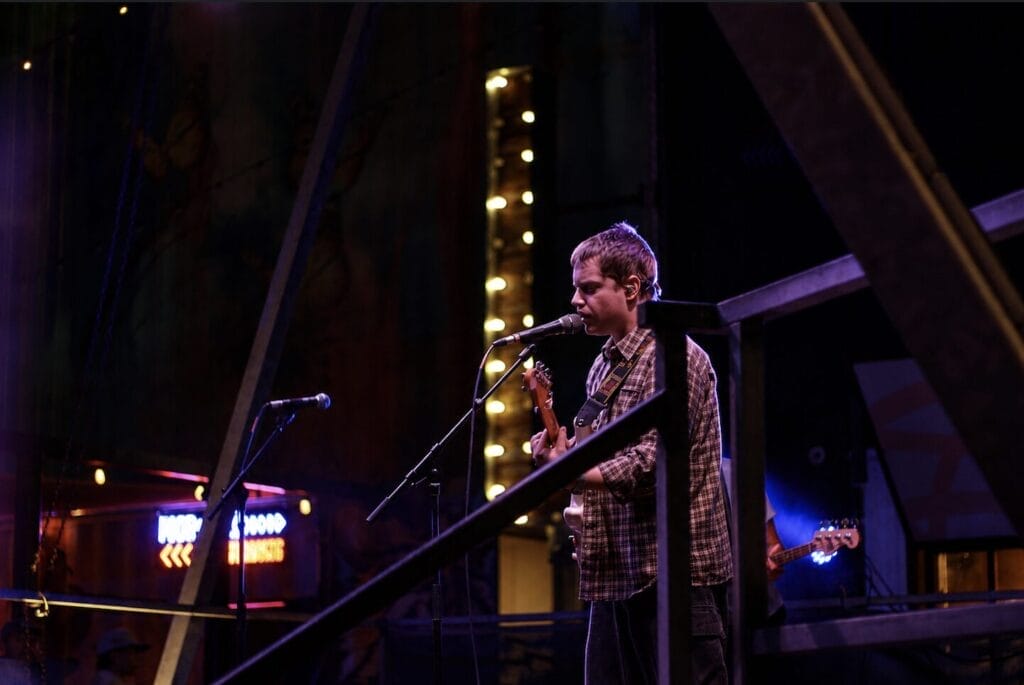
Yot Club and the New Indie Mainstream
If zzzahara represents one future of guitar-driven introspection, Yot Club represents another. Ryan Kaiser, also known as Yot Club, got his start on Tik Tok and similar to Country music, he loves to write about his dog.
Both artists operate within a generation that no longer recognizes traditional genre boundaries. Shoegaze intersects with bedroom pop. Post-punk collides with indie folk. Dream pop borrows from electronic music. Streaming culture has dissolved many of the walls that once separated scenes. Yot Club’s success demonstrates how audiences increasingly embrace atmosphere, mood, and emotional authenticity over conventional genre categories.
Together, Yot Club and zzzahara embody an important shift occurring within contemporary independent music. Their audiences discover songs through playlists, social media clips, college radio stations, underground venues, and algorithmic recommendations simultaneously. The result is an indie culture that feels decentralized yet deeply interconnected.
Neither artist sounds exactly like the shoegaze pioneers of the 1990s. Yet both inherit that tradition’s essential insight, that sound itself can become narrative, that emotion can exist beyond language, and that distortion can reveal rather than conceal.

The Future Arrives Quietly
Chinese Tobacco begins with a moment’s pondering of the despair of Love’s Labour’s Lost. If only Zzzahara would take the King of Navarre’s oath and refrain from relations for three years…
I thought I loved you
But the timing wasn’t right
You can spare me on the
Dopamine train
Promise I won’t ever
Take it in vain
– lyrics from “Chinese Tobacco” by zzzahara
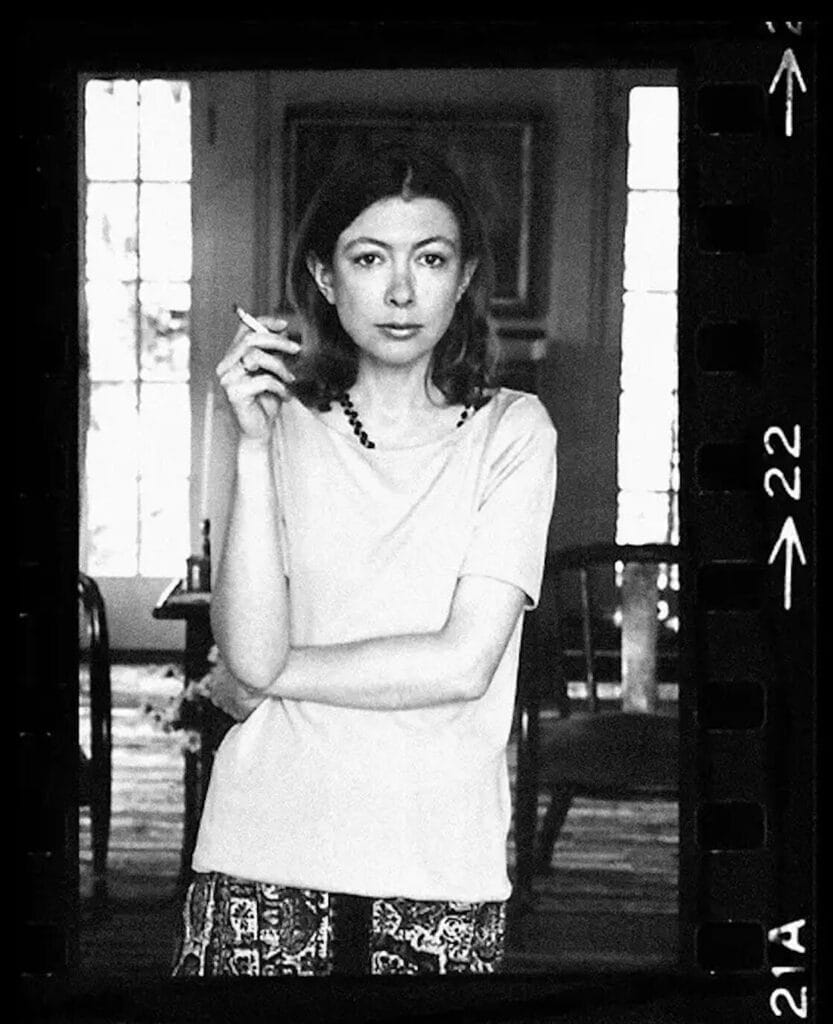
These Cigarettes are often referenced in his music. I see Joan Didion staring at me with her curt, astute, and inquisitive gaze. One of Joan‘s recurring observations was that cultural change rarely announces itself while it is happening. It appears first in overlooked details, liminal spaces, conversations after midnight. The Quartyard performance felt like one of those moments.
Nothing revolutionary occurred.
No Engels & Marxian, nor Bretonian manifestos were issued and no Shakespearean oaths were taken.
No grand slave-owning Jeffersonian declarations were made.
Instead, a musician stood beneath San Diego’s night sky and transformed personal history into communal experience. Around the stage stood hundreds of strangers, each bringing their own stories of heartbreak, uncertainty, longing, and resilience. For sixty or so minutes those stories occupied the same frequency. Perhaps that is the enduring power of this shoegaze. Not escapism, but empathy.
The realization that beneath layers of distortion, beneath buried vocals and endless pedals, another human being is trying to make sense of the same emotional weather. And for a moment, amid the glow of Quartyard’s lights and the wash of amplified guitars, that effort felt enough.
…
My Haiku for zzzahara
Beneath the pedals,
Beyond the noise of night—
Petals wake in spring.
Coastal sage exhales,
California poppies flame
Along Mission Trails.
Blue lilacs blooming,
Fog and sun trade whispers – hush
Guitars shimmer too.
Buried voices rise,
Like lupines after rainfall
Breaking winter’s hush.
Among black sage leaves,
Distortion drifts like ocean
Mist through open air.
Sweet monkeyflower
Clings to sandstone, bright and small—
A chorus returns.
Highland Park memories
Float southward on evening winds
Toward harbor’s lights.
Crowds gather softly,
Denim, silk, and weathered boots—
Many stories told.
Heartbreak feeds the roots,
And from the fractured silence
New colors emerge.
Future atmospheres
Bloom beyond the noise below—
Fields of blurry emo sounds.
…
Zzzahara has just completed his latest tour with Yot Club, but since he’s from LA, he will likely return to captivate San Diego’s atmosphere in the near future.
You can follow him on the usual Social Media platforms here:
https://zzzahara.lnk.to/socials/facebook
https://www.instagram.com/zzzahara.wav/?hl=en
https://x.com/zzzahara__